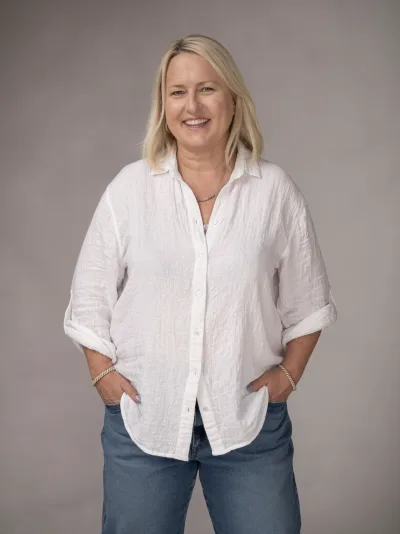
Angela Schellenberg
When someone dies with no warning, the grief usually arrives with trauma inside it. The body stays braced for an emergency that has already happened. Trauma-informed grief therapy, including Attachment-Focused EMDR, works on the shock first so the grief has room to move.
What counts as a sudden or traumatic loss?
A death with no warning and no goodbye. A car accident. A heart attack on an ordinary morning. A suicide. An overdose. A shooting or a homicide. A drowning, a fall, a diagnosis that became a death in days instead of years. Sometimes it is a death you saw, and sometimes it is a death you heard about on the phone.
What these losses share is the speed. There was no time for the mind to prepare, so the nervous system had to absorb the news all at once. That is a different job from the grief that follows a long illness. It is not worse grief. It is grief with an emergency stuck inside it.
Why does sudden loss feel so different from other grief?
Because the body never got the signal that the danger was over. Many people describe the same things. A scene that replays. The moment of the call, and exactly where they were standing. A jolt when the phone rings at a certain hour. A flatness that does not lift, or a vigilance that does not switch off. A sense that the world is no longer safe in the way it used to be.
None of this means you are grieving wrong. These are the adaptive responses of a system that was ambushed. Insight alone rarely resolves them, because they are not stored as thoughts. They are stored in the body, and the body needs a different kind of help to finish what it started.
How does attachment shape grief after a sudden death?
Grief is what attachment does when the person it was organized around is gone. When the loss is sudden, the attachment system is still reaching for someone it expected to see that evening. There was no slow letting go. So the reaching keeps going, often for years.
A sudden death can also land on older attachment wounds. If you learned early that you had to be the strong one, you may have handled the funeral, the paperwork and everyone else's feelings, and then gone back to work in a week. The body keeps that bill. Part of this work is noticing what you never got to feel because you were too busy holding everything together.
Can EMDR help after a sudden or traumatic death?
Often, yes. EMDR is one of the most researched trauma therapies in the world, and it is well suited to the parts of a loss that keep replaying. The phone call. The hospital. The image you cannot stop seeing. The belief that you should have known, or should have been there. EMDR targets the memory that holds that charge, so you can remember without being pulled back into the emergency.
I work in Attachment-Focused EMDR, the model developed by Laurel Parnell. It builds more support before any memory work: a Peaceful Place, a Container, and nurturing, protective and wise figures. After a sudden death that groundwork matters. Your system needs something steady to stand on before it goes near the worst day. You can read more in Does EMDR work for grief? and What is attachment-focused EMDR?.
What about loss to gun violence, suicide or overdose?
These deaths bring their own layers. Violence brings intrusive images and a story cut off mid-sentence. Suicide and overdose often bring guilt, questions with no answers, and a silence around the death that makes grieving harder. There may be police, courts, the news, or family members who will not talk about it.
I lost my father to gun violence in 1988, and I trained in Restorative Retelling with Dr. Ted Rynearson, a method built for bereavement after violent death. I also contributed to the GIFFORDS toolkit for gun violence survivors. If your loss involved a gun, my page for gun violence survivors gathers the organizations and resources I trust most.
How soon after a sudden death should I get help?
There is no waiting period you have to sit through. In the first weeks most people need safety, sleep, food and people more than they need therapy. Resourcing, the work of helping your body feel a little steadier, can begin at any point. Reprocessing a specific memory usually waits until daily life has enough stability to absorb a stirred-up week. We decide that together.
It is also never too late. Many of the women I work with lost someone suddenly ten or twenty years ago and are only now realizing that part of them is still standing where they were when the call came. Old grief returning is not going backward. It is the nervous system asking to finish something.
How does working with me look?
Sessions are 60 minutes and online, for clients located in California, Washington, Arizona or Florida. A single session is $350, with packages of three, six and ten. The first session is intake and pacing, not memory work. Details are on the Attachment-Focused EMDR page.
For grief that words have not reached, there is also the Equine Resourcing Intensive, a full Monday with the horses at Shakti Ranch in Malibu. It is somatic resourcing on the ground, not riding and not reprocessing. If you are not sure where to start, a free 15-minute conversation is the place to find out. It is fine if the answer is not yet.
If you would like something to hold in the meantime, the No Goodbye journal was written for grief after a sudden death. If your mother died suddenly, Losing your mother suddenly is written for you.
Frequently asked questions
Is grief after a sudden death a form of trauma?
Often it is. When a death comes with no warning, the nervous system absorbs the news as an emergency, and part of you can stay braced long after the funeral. Replaying scenes, startle, numbness and vigilance are common. This is sometimes called traumatic grief. It is not a flaw in how you are grieving. It is a body that was ambushed.
What is the best therapy for traumatic or sudden loss?
Trauma-informed approaches tend to help most, because the shock lives in the body and not only in thought. EMDR is one of the most researched trauma therapies and works on the moments that keep replaying. Restorative Retelling, developed by Dr. Ted Rynearson, was built specifically for bereavement after violent death. Angela uses Attachment-Focused EMDR and draws on Restorative Retelling.
Can EMDR help after a suicide or overdose death?
EMDR can help with the parts that replay and the guilt loops that often follow a suicide or overdose, such as I should have known or I should have called. It does not erase the person or the love. It loosens the charge on specific memories so the rest of the relationship has room to come back. Pacing and stability come first.
How long does sudden grief last?
There is no fixed timeline, and sudden grief often resurfaces around anniversaries, holidays or news of other deaths. What changes with support is not that the grief disappears, but that the emergency inside it settles. Many people find they can remember the person without being pulled back into the day they died.
Do you see clients in person in Los Angeles?
Weekly sessions are online, for clients located in California, Washington, Arizona and Florida. In-person work happens on Mondays only, as the Equine Resourcing Intensive at Shakti Ranch in the hills above Malibu.
Keep reading
Grief therapy and resources for gun violence survivors
Working together
Attachment-Focused EMDR for grief
Sixty-minute virtual sessions for clients in California, Washington, Arizona, and Florida. Single sessions are $350, with packages of three ($1,050), six ($2,100), and ten ($3,500). Paced for grief, with resources built before any memory work.
Angela Schellenberg
Angela is a licensed trauma and grief therapist, attachment-focused EMDR specialist, and trained Mother Hunger® Facilitator (a framework created by Kelly McDaniel). She hosts the Grief, Trauma & Your Mama™ podcast and leads Equine Resourcing Intensives and equine-assisted retreats at Shakti Ranch in Malibu. Licensed in California, Washington, Arizona, and Florida. Work with Angela →