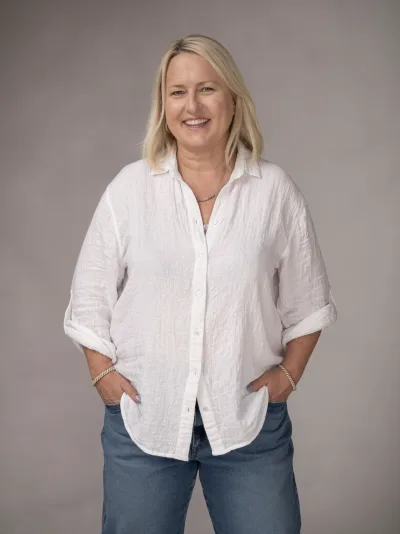
Angela Schellenberg
Attachment-focused EMDR is a form of EMDR developed by Laurel Parnell for wounds that formed inside relationships, not only in single events. It keeps the core of standard EMDR, bilateral stimulation and reprocessing, and adds more resourcing before any memory work, a stronger use of the therapeutic relationship, and a pace set by the client. The difference matters most when what hurts is how you were held, or were not.
What is standard EMDR, in one paragraph?
EMDR stands for Eye Movement Desensitization and Reprocessing. It was developed by psychologist Francine Shapiro in 1987 and has since become one of the most researched trauma therapies in the world. The idea is simple. When something overwhelms us, the brain cannot always file it properly. The memory gets stored raw, with the original images, body sensations, and beliefs still wired in, so that years later something small brushes against it and the whole thing fires as if it is happening now. EMDR uses bilateral stimulation, usually eye movements or alternating taps, while a memory is active, which helps the brain finish the filing. What happened becomes something that happened, instead of something that keeps happening. You do not have to retell every detail for it to work.
What does attachment-focused add to EMDR?
Standard EMDR grew up around single-incident trauma: the accident, the assault, the one terrible day. It works well there. Attachment-focused EMDR, the model developed by Laurel Parnell, was built for a different kind of injury, the kind that formed inside early relationship, often without a single event to point to. It adds four things.
Resourcing comes first, and it is not rushed. Before any memory is touched, we build inner supports and install them with slow bilateral tapping, which Parnell calls tapping in. A Peaceful Place your body reads as safe. A Container to hold what is not being worked on today. And the figures of support: a nurturing figure, a protective figure, and a wise figure. These can be real people, people from memory, characters, animals, or figures your nervous system simply needs to exist. For a woman missing a mother, that can include building the mother she needed. Not pretending. Giving the brain the raw material of repair.
Early relational wounds are the target, not only the event. Many people carry a memory network that is less a scene than a climate: the felt sense of a mother who was not there, or was there and unsafe, or was there and could not see them. Attachment-focused EMDR is designed to reach that climate. Reprocessing draws on the figures of support while a memory is active, so the system gets, in the present, what it did not get then. That is what repair means here. Not rewriting history. Giving the nervous system a different ending to lean on.
The relationship does part of the holding. The model treats attunement as method, not a nicety. I follow your pacing. I stay in conversation with you the whole way. For attachment wounds, being accompanied well is itself part of the work.
The pace is built for people who learned to over-function. Many of the women I see are highly capable. They manage, they perform, they get through. A nervous system that learned early that needs were expensive will try to be a good client too, pushing through a memory because it seems like what is expected. Attachment-focused EMDR slows that down on purpose. You stay in choice the entire time. The stop signal is always yours. We work in small, contained pieces and close every session in a settled state.
Who is attachment-focused EMDR for?
In my practice it is mostly for high-functioning women carrying relational trauma. Some have lost their mother to death, sudden or slow. Some are grieving a mother who is alive and unreachable, through estrangement or through a mother who could not mother. Some carry what is often called the mother wound, the long shadow of insufficient nurturance, protection, or guidance, which Kelly McDaniel names and describes in her framework Mother Hunger®. Many have done years of good talk therapy. They understand their patterns. Living inside them still feels the same.
It also suits people for whom standard EMDR was too much. If a previous attempt flooded you, or you left sessions feeling unfinished, that is often a sign that the resourcing was thin and the pace was not yours. It does not mean EMDR cannot work for you.
Attachment-focused EMDR is not the right first step for someone in active crisis, or for someone whose daily life does not yet have enough stability to absorb a stirred-up week. In those cases the resourcing work stands on its own, and reprocessing waits. I will say so plainly in the first conversation if that is where you are.
What training does Angela have in this model?
I am a licensed trauma and grief therapist, trained in Attachment-Focused EMDR, the model developed by Laurel Parnell. I want to be precise about the word trained, because the field is loose with credentials and you deserve to know what you are getting. I am not going to claim more than that. What I can say is that this model is the one I work in, that it is a gentler and more relational evolution of standard EMDR, and that it was built for exactly the kind of pain most of my clients bring.
I am also an attachment-informed grief educator and a trained Mother Hunger® Facilitator in the framework Kelly McDaniel created. That shapes how I think about the targets. For daughter grief, the trauma is the break in attachment itself, and when the wound is relational, the repair has to be relational too.
Can attachment-focused EMDR be done online?
Yes, and my practice is fully virtual. Sessions are 60 minutes, one to one, for clients located in California, Washington, Arizona, or Florida at the time of the session. Online EMDR has been studied heavily since the pandemic, and research reviews show outcomes comparable to in-person care for many people, with EMDRIA publishing formal guidelines for remote work.
Bilateral stimulation travels through a screen without trouble. We can use guided eye movements, an on-screen tracker, tapping on your own knees or shoulders, or the butterfly hug. Some clients prefer small wireless tapping tabs, one in each hand, which I can control remotely during a session or which you can run yourself in self-guided mode between sessions. They are optional. Your own two hands work. What matters is the left-right rhythm that keeps one foot in the present while a memory is active, so your brain can reprocess instead of relive.
How do the horses in Malibu fit into this work?
Carefully, and with a clear line. EMDR reprocessing stays exactly what it is: a virtual, one-on-one session. The horses are not part of reprocessing. They are part of what makes reprocessing possible.
The resources at the heart of this model, a Peaceful Place, a Container, the figures of support, work best when your body has actually felt something close to safety rather than only imagined it. At Shakti Ranch in Malibu, on Mondays only, I offer ground-based equine-assisted sessions. There is no riding and nothing to perform. Horses are prey animals, exquisitely attuned to a nervous system, and they respond honestly to what you feel without needing you to explain it. Being near them invites co-regulation. Your body borrows their steadiness and slowly learns it is safe to settle.
The Equine Resourcing Intensive runs Monday from 10am to 3pm and is $4,000. The Equine Resourcing Intensive is somatic support, not EMDR therapy itself, but it is built around the same resourcing practices she uses in her clinical work: Peaceful Place, Container, and the three figures of support. For many women it is what gives those resources somewhere real to live in the body, before or alongside the virtual sessions that do the reprocessing.
How much does attachment-focused EMDR cost with Angela?
A single 60-minute virtual session is $350. Packages are three sessions for $1,050, six for $2,100, and ten for $3,500. Three is enough continuity to map what your body has been holding and begin reprocessing. Six is a sustained container for deeper attachment grief. Ten is the full arc: grief, attachment repair, and integration at a humane pace. I do not bill insurance directly, but you can request a superbill to submit for possible out-of-network reimbursement. The first session is intake and pacing, not reprocessing, and every path begins with a free conversation.
Where this work happens
The reprocessing itself is always virtual, one to one, and described on the Attachment-Focused EMDR page. The ground-based work with the horses, the Equine Resourcing Intensive, is on the equine-assisted grief work page. Some women start with the horses, some start online, and some never come to Malibu at all. If you would like help deciding, or you are not sure this is the right door, a free 15-minute conversation is available with no intake forms and no obligation.
Frequently asked questions
Is attachment-focused EMDR a different therapy from EMDR?
No. It is EMDR, with the same bilateral stimulation and reprocessing at its core, adapted by Laurel Parnell for wounds that formed inside relationships. The differences are in emphasis: much more resourcing before any memory work, the figures of support used throughout reprocessing, closer attunement, and a pace the client sets. If standard EMDR was too much for you, this is usually why.
What are the figures of support in attachment-focused EMDR?
They are inner resources built before any memory work: a nurturing figure, a protective figure, and a wise figure. They can be real people, people from memory, animals, or figures your nervous system simply needs. They are installed with slow bilateral tapping, which Parnell calls tapping in, and drawn on during reprocessing so the system receives, in the present, what it did not get then.
Do I need a diagnosis to do attachment-focused EMDR?
No. Attachment-focused EMDR is used for mother loss, estrangement, the mother wound, and grief that has trauma inside it, none of which require a formal diagnosis. What matters is whether something is still running your body as if it were happening now. Your nervous system does not rank your pain. If it is still active, it counts, and the free conversation is where we find out whether EMDR is the right door.
Is the Equine Resourcing Intensive the same as EMDR reprocessing?
No, and the name is precise about which half of the work it is. Attachment-Focused EMDR begins with resourcing, not memories: Peaceful Place, Container, and the three figures of support. The intensive is that resourcing, built on the ground with the horses in Malibu on a Monday from 10am to 3pm, so the resources have somewhere real to live in the body. Reprocessing itself stays a virtual one-to-one session. Many women do both, in either order.
How is attachment-focused EMDR different for people who over-function?
Many high-functioning women try to be good clients, pushing through a memory because it seems expected. A nervous system that learned needs were expensive will do that automatically. Attachment-focused EMDR slows the work on purpose. Resources come first, the stop signal is yours, we work in small contained pieces, and every session closes in a settled state. The pace is treated as part of the method, not a delay.
Keep reading
Why do horses help with grief when therapy hasn't worked?
Where can I find an EMDR intensive near Santa Monica or LA?
Equine-assisted grief work at Shakti Ranch, Malibu
What is equine-assisted EMDR, and how do horses fit into EMDR therapy?
Working together
Attachment-Focused EMDR, online
Sixty-minute virtual sessions, one to one, for clients in California, Washington, Arizona, and Florida. Single sessions are $350, with packages of three, six, and ten. Ground-based work with the horses at Shakti Ranch in Malibu is available on Mondays as somatic support alongside the online sessions.
Angela Schellenberg
Angela is a licensed trauma and grief therapist, attachment-focused EMDR specialist, and trained Mother Hunger® Facilitator (a framework created by Kelly McDaniel). She hosts the Grief, Trauma & Your Mama™ podcast and leads Equine Resourcing Intensives and equine-assisted retreats at Shakti Ranch in Malibu. Licensed in California, Washington, Arizona, and Florida. Work with Angela →