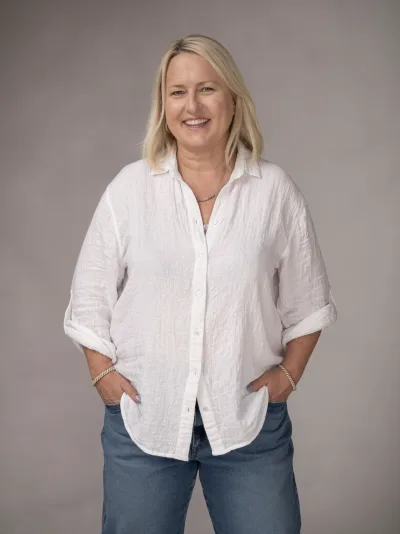
Angela Schellenberg
Yes, EMDR helps with grief when part of the grief has gotten stuck: an image, a moment, or a belief that keeps replaying as if it is still happening. It does not remove grief, and it is not meant to. The love, the missing, and the shape of the relationship stay yours.
Is grief something EMDR is supposed to fix?
No, and I want to say that first because it changes what you should expect. Grief is not a disorder. It is what attachment does when the person it was organized around is gone. A nervous system that learned safety in relationship will keep reaching for that relationship after it ends. That reaching is not a malfunction. It is love with nowhere to go.
So the goal of EMDR for grief is not to make you stop grieving. The goal is narrower and more useful. Some part of your loss may have gotten stored the way trauma gets stored: raw, with the original images and body sensations still wired in, firing as if it is happening now. That part can be reprocessed. The rest of your grief is allowed to be grief.
People sometimes arrive worried that EMDR will take something from them. It will not take the person. What it can take is the charge on a specific moment, so you can remember without being pulled back into the emergency.
What does EMDR actually target in grief?
The stuck places. In my practice they tend to sound like this. The last day. The hospital room, and one particular detail of it: the sound of a machine, the color of a blanket, the moment you stepped out to get coffee. The phone call, and where you were standing when it came. The face she made. The face you made. The words you said, or the ones you did not get to say.
Then there are the loops. Guilt loops are the most common: I should have noticed, I should have been there, I should have pushed the doctors harder, I should have called. These are not really thoughts. They are beliefs that a raw memory wrote, and they run underneath a life like a bass note. EMDR targets the memory that wrote the belief, so that a truer belief has somewhere to live. It was my fault becomes I did the best I could. Not as an affirmation, but as something the body can finally take in.
There is one belief I see in grieving clients more than any other, and almost nobody knows they are carrying it. I am going to die. It makes a terrible kind of sense. The worst thing is no longer hypothetical. It already happened, to someone you loved. EMDR helps a system hold both truths at once: they are gone, and you survived. It works on the sense of safety itself.
What does EMDR leave alone?
The love. The missing. The wish that she could see what you have done with your life. The way a song or a smell still finds you. Nothing about EMDR erases memory, and you will not lose the relationship. Clients sometimes worry that if the pain gets smaller the person will too, and I understand the fear. In my experience the opposite happens. When the last day stops running the show, the rest of the relationship gets room to come back. People remember the ordinary Tuesdays again, not only the ending.
EMDR also leaves alone the grief that is simply grief. The sadness that arrives on an anniversary is not a target. The ache at the grocery store is not a target. Those are attachment doing what attachment does, and the work there is companionship and integration, not reprocessing. Part of my job is to tell the difference with you.
How does attachment-focused EMDR work with mother loss?
Mother loss is different in kind, not only in degree. Your mother was your first attachment figure. Before language, before memory, your nervous system organized itself around her presence or her absence, her consistency or her unpredictability. When she dies, or when the relationship breaks, or when you finally reckon with the mother you needed and never had, the break in attachment is itself the wound. Every later loss lands on it.
Standard EMDR grew up around single events. Attachment-focused EMDR, the model developed by Laurel Parnell, was built for injuries that formed inside a relationship. It brings much more resourcing before any reprocessing: a Peaceful Place, a Container, and the figures of support, a nurturing figure, a protective figure, a wise figure. For a daughter grieving or missing a mother, that can include building the mother her nervous system needed. The pacing is hers. The relationship with the therapist is treated as part of the method, because when the wound is relational, the repair has to be relational too.
This matters for a specific group of women I see often: high-functioning, competent, the one everyone else leans on, who did the estate and the eulogy and went back to work in a week. The body kept the bill. Attachment-focused EMDR gives that body somewhere to set it down without requiring her to fall apart first.
How do I know if my grief has trauma inside it?
A few signs. The loss replays rather than recedes. There is one scene you cannot approach without your body reacting as if it were today. You avoid a place, a road, a hospital, a phone ringing at a certain hour. You feel a strange flatness that does not lift, or a vigilance that does not switch off. You are years out and still living, bodily, in the moment it happened.
Sudden or traumatic death makes this more likely. When death comes without warning, the brain often does not know the trauma is over, so part of you stays inside the emergency, still scanning the world for the person. But trauma can also live inside a slow death, a long caregiving season, or a relationship that hurt for decades before it ended. Your nervous system does not rank your pain. If it is still running your body, it counts.
If most of this sounds like you, EMDR is probably a reasonable door. If none of it does and what you have is grief that hurts in the ordinary way, you may not need EMDR at all, and I will tell you so.
What does a course of EMDR sessions for grief look like?
Sessions with me are 60 minutes and fully virtual, for clients located in California, Washington, Arizona, or Florida. A single session is $350. Packages are three sessions for $1,050, six for $2,100, and ten for $3,500. The first session is intake and pacing, not reprocessing. We map what you are carrying and begin building resources. Reprocessing starts when your system has something steady to stand on, which for some women is session two and for others is session four.
A focused piece, one hospital room or one phone call, often moves in three to six sessions. Deeper attachment work takes longer, and a container of six or ten gives it a humane pace. We close every session in a settled state, and processing continues between sessions, sometimes with vivid dreams or a feeling on the move. That is the system working. We figure out the right length together after the first conversation, and you are never locked into more than you want.
What are the honest limits of EMDR for grief?
EMDR will not shorten grief to a schedule. It will not make an anniversary easy. It will not resolve a relationship that was unresolved when the person died, though it can loosen the beliefs you took from it. It is not a substitute for people who love you, for rest, or for time. And it does not work well when someone is in active crisis or does not yet have enough stability in daily life to absorb a stirred-up week. In those cases resourcing comes first and reprocessing waits.
The exact mechanism of EMDR is still being studied, and anyone who tells you otherwise is overselling. What is not in question is that it is one of the most researched trauma therapies in the world, and that for the stuck, replaying parts of grief it does something talking alone often cannot. That is the claim. It is a modest one, and it is enough.
Where this work happens
Attachment-focused EMDR with me is virtual and one to one, described in full on the Attachment-Focused EMDR page. For grief the body has not yet let itself feel, there is ground-based somatic work with the horses at Shakti Ranch in Malibu on Mondays, on the equine-assisted grief work page. The horses are not part of reprocessing. They help the resources that reprocessing depends on feel real. If you are not sure which fits, or whether EMDR is the right door at all, a free 15-minute conversation is the place to find out. It is fine if the answer is not yet.
Frequently asked questions
Will EMDR make me forget my mother or feel less connected to her?
No. EMDR does not erase memory and cannot remove a relationship. What changes is the charge on specific moments, such as the last day or the phone call, so they stop replaying as if they are happening now. Most clients find that when the ending loosens its grip, the rest of the relationship has more room. They remember more of her, not less.
How soon after a death can I start EMDR?
There is no fixed waiting period, and the answer depends on what your daily life can hold. Early grief is not a disorder and often needs companionship more than reprocessing. Resourcing can begin at any point. Reprocessing a specific moment usually waits until you have enough stability to absorb a stirred-up week. We decide that together in the first conversation.
Does EMDR work for grief that is not about a death?
Yes. Attachment-focused EMDR was built for wounds that formed inside relationships, so it applies to estrangement, a mother who could not mother, and the losses that keep returning without a funeral attached. The targets are the same kind: images, moments, and beliefs that still run the body. The love and the missing are left alone, because those are not the problem.
How many EMDR sessions does grief usually take?
It depends on what is stuck. A focused piece, such as one hospital room or one call, often moves in three to six sessions. Deeper attachment grief, especially mother loss, tends to need a longer container of six to ten. The first session is intake and pacing rather than reprocessing. Angela offers single sessions and packages of three, six, and ten, and you choose after the free conversation.
Can EMDR help with guilt after a death?
Guilt loops are one of the most common targets in grief work. Thoughts like I should have noticed or I should have been there are usually beliefs written by a raw memory, not conclusions you reached by thinking. EMDR reprocesses the memory that wrote the belief, so that something truer, such as I did the best I could, can be taken in by the body rather than only understood.
Keep reading
Why grief keeps coming back: understanding the attachment connection
Where can I find an EMDR intensive near Santa Monica or LA?
Attachment-Focused EMDR for grief and trauma
Grief after a sudden or traumatic death: why it is different, and what helps
Working together
Attachment-Focused EMDR for grief
Sixty-minute virtual sessions for clients in California, Washington, Arizona, and Florida. Single sessions are $350, with packages of three ($1,050), six ($2,100), and ten ($3,500). Paced for grief, with resources built before any memory work.
Angela Schellenberg
Angela is a licensed trauma and grief therapist, attachment-focused EMDR specialist, and trained Mother Hunger® Facilitator (a framework created by Kelly McDaniel). She hosts the Grief, Trauma & Your Mama™ podcast and leads Equine Resourcing Intensives and equine-assisted retreats at Shakti Ranch in Malibu. Licensed in California, Washington, Arizona, and Florida. Work with Angela →