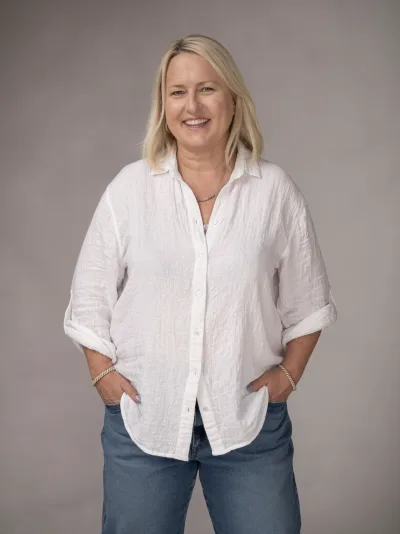
Angela Schellenberg
When a mother who could not give you enough nurturance, protection or guidance dies, the grief often comes in two layers. One is for the woman who died. The other is for the mother you needed and never fully had, and her death closes the door on ever getting her. Both are real grief, and both can heal.
What is Mother Hunger®, briefly?
Mother Hunger® is a framework created by therapist and author Kelly McDaniel. It names the longing that forms in a daughter when the care a mother gives (nurturance, protection and guidance) was missing or unreliable. It is not a diagnosis, and it is not about blame. It is language for an attachment wound many women have carried without a name. I am a trained Mother Hunger® Facilitator, and I wrote a longer introduction in What is Mother Hunger®?
Why does a mother's death stir up Mother Hunger®?
While she was alive, part of you may have kept hoping. Maybe this visit would be different. Maybe she would finally ask about your life, or say she was proud of you, or say sorry. Even women who stopped expecting it often find a small hope was still running underneath.
Her death ends that hope. So alongside missing her, you may find yourself grieving something harder to explain: the conversation that will never happen, the repair that will never come, the mother you kept waiting for. That second grief can be louder than the first, and it often surprises people.
Is it normal to feel relief, anger or numbness?
Yes. When the relationship was complicated, grief rarely looks the way people expect. Some women feel relief, then guilt about the relief. Some feel anger that arrives at strange moments, like choosing the photos for the service. Some feel almost nothing at first, and then fall apart months later over something small.
None of this means you did not love her. Mixed feelings are what attachment does when the person you depended on was also the person who hurt or missed you. Your body is sorting through two truths at once.
Why do people around me not understand?
Most condolences assume a simple story: a loving mother, a daughter who misses her. When your story is more tangled, kind words can land wrong. You may find yourself nodding at the funeral while something in you says, that is not who she was to me.
This kind of grief is often disenfranchised, which means the people around you do not see it as grief at all. That is one reason it can feel so lonely. It helps to be around people who understand that you can love someone and still be grieving what they could not give.
What if my mother died suddenly?
A sudden death adds shock on top of an already complicated grief. There was no last visit, no chance to try one more time, sometimes no goodbye at all. The body can stay braced long after the funeral. If this is your story, Losing your mother suddenly and Grief after a sudden or traumatic death were written for you, and the No Goodbye journal gives the unfinished conversation somewhere to go.
What helps this kind of grief heal?
Naming both griefs out loud helps. So does letting the relationship be as complicated as it was, without forcing it into a tidy story in either direction. Many women find it helps to grieve with others who understand the mother wound, rather than only with people who loved their mother.
Because this wound formed in the body before there were words for it, body-based work tends to reach it in ways insight alone does not. In my practice I use Attachment-Focused EMDR, which builds nurturing, protective and wise figures before any memory work. For many daughters, that is the first time the body takes in a kind of care it went without. You can read more in What is attachment-focused EMDR?
Where to go from here
If you want to listen first, my podcast Grief, Trauma & Your Mama is full of conversations about exactly this. If you want company, the free community is a quiet place to be with other women carrying mother loss. If you want to work together, Attachment-Focused EMDR sessions are online for clients in California, Washington, Arizona and Florida, and every path starts with a free 15-minute conversation.
To go deeper into the framework itself, start with Kelly McDaniel's book, Mother Hunger®: Understand and Heal the Wounds of Lost Nurturance, Protection, and Guidance, and her site, kellymcdanieltherapy.com.
Copyright Kelly McDaniel, Mother Hunger® and kellymcdanieltherapy.com, All rights reserved.
Frequently asked questions
Can you have Mother Hunger® after your mother dies?
Yes. Mother Hunger®, a framework created by Kelly McDaniel, describes the longing left when a mother's nurturance, protection or guidance was missing. Her death does not end that longing. It often brings it forward, because the hope of ever receiving that care ends too.
Why is grieving a difficult mother so confusing?
Because you may be grieving two things at once: the woman who died, and the mother you needed but never fully had. Relief, anger, guilt and numbness can all show up alongside love. These mixed feelings are normal in complicated attachment, not a sign that you did not care.
Is Mother Hunger® grief the same as regular grief?
It overlaps with it but adds a layer. Ordinary grief centers on losing someone you had. Mother Hunger® grief also includes mourning care that never fully existed, which the people around you may not recognize as a loss at all.
Can EMDR help with Mother Hunger® and mother loss?
Attachment-Focused EMDR, developed by Laurel Parnell, was built for wounds that formed inside early relationships. It builds nurturing and protective resources before memory work, which can help the body take in care it went without. Angela offers it online for clients in California, Washington, Arizona and Florida.
Is Angela a Mother Hunger® Facilitator?
Yes. Angela Schellenberg is a licensed trauma and grief therapist and a trained Mother Hunger® Facilitator, trained by Kelly McDaniel, who created the Mother Hunger® framework.
Keep reading
What is Mother Hunger®? The grief of not being mothered
Why is it so hard to grieve a mother I had a difficult relationship with?
I was estranged from my mother when she died. Why does it hurt this much?
Working together
Attachment-Focused EMDR for grief
Sixty-minute virtual sessions for clients in California, Washington, Arizona, and Florida. Single sessions are $350, with packages of three ($1,050), six ($2,100), and ten ($3,500). Paced for grief, with resources built before any memory work.
Angela Schellenberg
Angela is a licensed trauma and grief therapist, attachment-focused EMDR specialist, and trained Mother Hunger® Facilitator (a framework created by Kelly McDaniel). She hosts the Grief, Trauma & Your Mama™ podcast and leads Equine Resourcing Intensives and equine-assisted retreats at Shakti Ranch in Malibu. Licensed in California, Washington, Arizona, and Florida. Work with Angela →