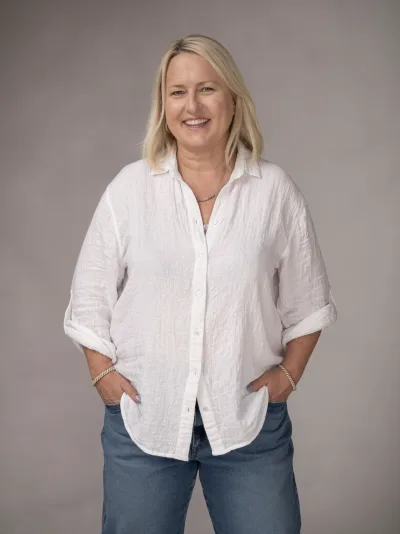
Angela Schellenberg
Grieving a mother you had a difficult relationship with is hard because you are mourning two things at once: the mother she was and the mother she could never be. That double loss lives in the body as an attachment wound, not just a sad feeling, and it rarely receives the recognition it deserves from the people around you.
A note on credit: Mother Hunger® is a term and framework created by therapist Kelly McDaniel, author of Mother Hunger® (2021). This article explains her concept in my own words. Learn more at kellymcdaniel.com.
What does it mean to grieve someone you had a complicated relationship with?
Most people picture grief as a clean, linear thing. Someone dies. You are sad. Time passes. You feel better. That model might work for some losses. It does not work for this one.
When your relationship with your mother was complicated — marked by inconsistency, emotional unavailability, addiction, mental illness, criticism, or a love that always seemed conditional — you enter grief already carrying a backlog of smaller losses. Every birthday she forgot. Every moment she turned away. Every version of her you hoped for and never got. Her death does not close that account. In a strange and painful way, it freezes it open forever.
This is what makes complicated maternal grief so disorienting. You may grieve her fiercely and resent her in the same hour. You may stand at her graveside and feel relief, then feel ashamed of the relief. You may miss her desperately while also knowing, clearly, that the relationship hurt you. All of that is true at once. None of it cancels the other out.
The clinical term for this kind of loss is ambiguous grief, and the ambiguity is not a sign that you are confused or ungrateful. It is a sign that the relationship itself was genuinely complex, and your nervous system is responding honestly to that complexity.
Why does losing a mother feel different from other kinds of loss?
Your mother was not just a person you loved. She was your first attachment figure, the relationship your nervous system was literally built inside of. Before you had words, before you had memories you can consciously recall, your body was learning what it meant to be safe or unsafe, seen or unseen, soothed or left alone — and it was learning those things from her.
This is why mother loss functions differently in the body than other grief. Research by DeJong and colleagues published in 2024 found that women who lost a parent in youth showed higher anxious attachment and greater separation anxiety in adulthood compared to women whose parents were both alive. The loss did not stay in the past. It reorganized something in how these women moved through their closest relationships, years and even decades later.
When you lose a mother with whom you already had an insecure or painful attachment, you are not simply losing a person. You are losing the last remaining possibility that things could have been different. The door closes. And grief for a door that was always half-shut is a particular kind of grief that almost no one around you will name correctly.
What is Mother Hunger® and how does it connect to this kind of grief?
Kelly McDaniel coined the term Mother Hunger® in her 2021 book of the same name. Mother Hunger® describes the longing that develops in daughters who did not receive the nourishment — emotional, relational, physical safety — that a mother is meant to provide. It is not a character flaw. It is a wound with a name.
For daughters who grew up with a mother who struggled, who was absent in the ways that matter most even when she was physically present, Mother Hunger® means arriving at adulthood with a chronic ache that is hard to locate and even harder to explain. And then she dies, and the ache shifts into something sharper.
Because here is the thing nobody tells you: when a mother dies, daughters who experienced Mother Hunger® do not just grieve the mother they had. They grieve the mother they never had and now will never have. They grieve the phone call they never made. They grieve the conversation they rehearsed a hundred times and never had. They grieve the grandmother their children will not know, or will only know in the fragmented, impaired way one reader described so honestly — a grandmother who got to meet her grandchild, but whose mind had already started to leave.
That grief is real. It counts. And it deserves more than a platitude about being in a better place.
Why do other people's responses to this grief feel so hollow or even hurtful?
When you grieve a mother with whom things were uncomplicated, the people around you know more or less what to say. They bring food. They sit with you. They say she was wonderful and mean it and you agree.
When you grieve a complicated mother, the script breaks down. People sense something is off in your grief, something that does not match what grief is supposed to look like, and they become uncomfortable. They urge you to focus on the good memories. They remind you she did her best. They go quiet when you are honest about the parts that were hard, because honesty about a dead parent feels, to many people, like a kind of betrayal they are not sure they can witness.
So you learn to edit. You present the acceptable version of your grief in public and carry the rest alone. And the rest — the complicated, layered, ambivalent grief — grows heavier in the silence because it has nowhere to go.
One thing I want to say clearly: the shame that lives underneath this grief, the part that wonders whether a different daughter could have fixed the relationship, whether you should have called more or forgiven faster or tried harder — that is not a character flaw. That is attachment logic. That is your nervous system trying to find a way to have had some control in a dynamic where you were always the child and she was always the parent. It is not true. But it is understandable, and it needs to be met with compassion, not more silence.
How does this grief show up in the body and in everyday life?
Grief for a complicated mother does not arrive once and then leave. It resurfaces. It spikes at milestones: a wedding, the birth of a child, a promotion, a diagnosis, a moment when you catch yourself reaching for your phone to call someone who is no longer there. It shows up in your parenting, in your closest relationships, in the way you respond when someone you love disappoints you.
A 2024 study found that women who lost their mother during childhood reported lower relationship satisfaction with their current partner, and that how a woman remembered her bond with her mother had a direct effect on attachment-related anxiety in adulthood. The loss does not stay quarantined to the past. It lives in the present, in the body, in the small moments other people would never connect to grief.
This is particularly true when the relationship involved inconsistency. A mother who was sometimes warm and sometimes cold, sometimes present and sometimes frightening, creates what attachment researchers call an organized-then-disorganized attachment response. Your nervous system learned to stay alert, to scan, to not quite trust that love was stable. That alertness does not simply switch off when she dies. The nervous system keeps looking. It keeps bracing.
You are not being dramatic. You are not stuck. You are living inside the long aftershock of an attachment that was never fully secure, and you are doing it without a map because almost no one talks about this honestly.
What actually helps when grief is this layered and this lonely?
The first thing that helps is being witnessed accurately. Not having your grief tidied up or corrected or compared to someone else's loss. Just having someone sit with the full complexity of it and not flinch. That is harder to find than it should be, which is exactly why community with other women who have lived this matters so much.
Beyond witness, there are approaches to grief and trauma that are specifically designed for losses that have attachment at their center. EMDR therapy, particularly when it is attachment-focused, can help the nervous system process not just the death but the entire relational history that preceded it, including the grief that was never allowed to exist while she was still alive. Somatic work helps because this kind of grief is held in the body first and language second, and you cannot think your way out of something that was never primarily a cognitive experience.
Working with the framework of Mother Hunger® — developed by Kelly McDaniel — can also provide a language for what you have been carrying. Many women describe the experience of finally having words for the longing as a kind of relief they did not know they needed.
None of this is fast. None of it follows the timeline other people have in mind for you. But it is not permanent either. The goal is not to resolve the complexity of who she was and what you lost. The goal is to be able to carry it without it quietly running your life.
References: DeJong et al. (2024), How is the loss of a parent in youth related to attachment and adult separation anxiety; 2024 study on the impact of childhood maternal loss on adult romantic relationship formation and attachment; Kelly McDaniel, Mother Hunger® (2021), Central Recovery Press.
Frequently asked questions
Is it normal to feel relief after a difficult mother dies?
Yes, and relief does not mean you did not love her. When a relationship has been painful or exhausting for a long time, the end of that particular tension is something the nervous system registers as relief — even in the middle of grief. Both feelings can be true at the same time, and neither one cancels the other out.
Why do I feel more grief now that she is gone than I did when she was alive?
When a complicated mother is still alive, there is still the possibility of something changing, some conversation finally happening, some version of repair. Her death ends that possibility permanently, and often it is the closing of that door — not just her absence — that triggers the deepest grief. You may also be grieving for the first time, because the relationship itself never felt safe enough to grieve in.
How long does grief for a complicated relationship last?
There is no accurate timeline for this kind of loss, and research is clear that grief for a primary attachment figure does not resolve on the schedule that other people tend to set for you. What changes over time, with support, is not that the grief disappears but that it becomes less likely to ambush you and more possible to be with.
Can therapy actually help with grief that involves a complicated mother?
Yes, particularly approaches that address both the grief and the underlying attachment patterns, such as attachment-focused EMDR. It is worth looking for a therapist who has specific experience with maternal grief and mother-daughter relational trauma, rather than someone who approaches grief as a general emotional event.
What is Mother Hunger and is it related to losing my mother?
Mother Hunger® is a term created by Kelly McDaniel in her 2021 book of the same name. It describes the longing that develops in daughters who did not receive adequate nurturing, protection, or guidance from their mothers. For daughters carrying Mother Hunger®, a mother's death often triggers grief not only for who she was but for who she could never be, and that layered loss is one of the most difficult and least witnessed kinds of grief there is.
Keep reading
I lost my mom and I live in LA. Why can't I find grief support that actually feels like it's for me?
Why does fall feel so heavy before the holidays have even started?
Why did I cry leaving my grief retreat? I didn't expect going home to hurt.
Something to write in
Still Her Daughter
A guided journal for daughters after mother loss, written to be used at whatever pace makes sense.
Read more · $14.99
Angela Schellenberg
Angela is a licensed trauma and grief therapist, attachment-focused EMDR specialist, and trained Mother Hunger® Facilitator (a framework created by Kelly McDaniel). She hosts the Grief, Trauma & Your Mama podcast and leads Equine Resourcing Intensives and equine-assisted retreats at Shakti Ranch in Malibu. Licensed in California, Washington, and Arizona. Work with Angela →