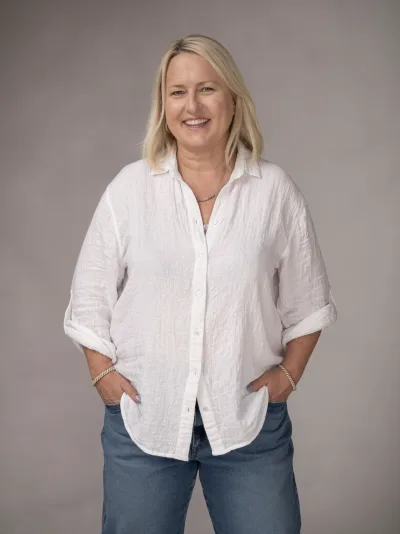
Angela Schellenberg
EMDR intensives near Santa Monica and Los Angeles are offered by Your Best Life Therapy (Santa Monica), Woven Trauma Therapy (Santa Monica and greater LA), and A Road Through (Sherman Oaks). Before you book any of them, one question matters more than the rest: does this therapist understand that mother loss is not generic trauma, but an attachment wound that lives in the body before it ever becomes a story?
What EMDR intensives are actually available near Santa Monica or LA?
If you are on the Westside and ready to stop circling, here is what actually exists within reach. Your Best Life Therapy is located in Santa Monica, a short walk from the ocean, and offers structured intensives ranging from six to fourteen hours across one or two days. They combine EMDR with Accelerated Resolution Therapy and offer a retreat format for clients who want something beyond a standard clinical office. A deposit is required to hold your spot.
Woven Trauma Therapy serves Santa Monica and greater Los Angeles with one-day, three-day, and five-Equine Resourcing Intensive formats. They are explicit that their approach is research-supported for Complex PTSD, and they offer online options for California residents who cannot travel. A Road Through is in Sherman Oaks, about ten miles north of Hollywood, and builds rest and integration breaks into their one, two, and three-Equine Resourcing Intensives. That structure matters more than it sounds when the content is heavy.
If you are open to working virtually, Olivia Lavelle, LCSW offers multi-day structured intensives for California residents and specializes specifically in attachment trauma. That specialization is worth noting, because attachment trauma and acute trauma are not the same clinical territory.
What makes an EMDR intensive different from regular weekly therapy?
An EMDR intensive compresses a timeline that weekly therapy stretches across months. Your nervous system gets sustained, uninterrupted time to move through material instead of opening and closing the same wound every fifty minutes. Weekly therapy moves in small increments: you go in, open something, leave, come back seven days later, and open it again. For some people and some material, that rhythm works. For mother loss, especially when the loss is layered or rooted in years of uncertain attachment, weekly pacing can feel like you are always approaching the wound but never quite reaching it.
Research reviewed by Woven Trauma Therapy indicates that intensive formats may be more cost-effective than traditional weekly therapy and are considered clinically safe for Complex PTSD. Woven Trauma Therapy notes that what might take months in a weekly format can move significantly in one to five focused days. That reflects something real about how trauma memory works: the brain processes differently when it has room to stay with material rather than stopping before anything settles.
Extended sessions include built-in breaks for food, rest, and integration. That is not a luxury. It is clinical design. Processing grief and attachment injury at the depth an intensive reaches requires the nervous system to regulate between rounds, not only push through them.
Why does it matter whether the therapist understands mother loss as attachment trauma?
A therapist trained in EMDR and a therapist who understands that losing a mother is an attachment wound before it is anything else are not automatically the same person. That difference shapes everything about how the work goes, and most provider directories will not tell you that. Your mother was your first attachment figure. Before language, before memory, before you could name anything, your nervous system organized itself around her presence or her absence, her consistency or her unpredictability. When she dies, when the relationship ruptures, or when you finally reckon with the fact that the mother you needed never existed in the form you needed her, the nervous system does not register that as the loss of a person in the ordinary sense. It registers it as the loss of the original anchor point. That is a different level of wound.
EMDR is a powerful tool for processing trauma memory. But the therapist using it has to understand what they are actually targeting. A clinician trained primarily in single-incident trauma, a car accident, an assault, one specific event, may be skilled at EMDR without being equipped for the diffuse, relational, chronically repeated injuries that come with mother loss. The question to ask before booking is not only what formats do you offer, but: have you worked specifically with attachment trauma rooted in the maternal relationship, and how do you approach that differently?
What should I ask before booking an EMDR intensive for mother loss?
Before booking, ask directly whether this therapist has worked with maternal grief and how they approach EMDR when the trauma is relational and long-standing rather than tied to a single event. Every provider listed above will require an intake or consultation before you book. That intake is not administrative paperwork. It is your first real opportunity to find out whether this person understands the specific terrain you are bringing.
A few questions worth raising directly:
- Do you have experience working with maternal grief specifically, not only grief in general?
- How do you approach EMDR when the trauma is relational and long-standing rather than tied to a single event?
- Do you understand the difference between grieving a mother you lost to death and grieving the mother you needed and never had?
- What does integration support look like after an intensive? What happens in the weeks following the intensive days?
If a provider answers these questions with only vague reassurances, that tells you something. A therapist who has actually worked with attachment-rooted maternal grief will not be thrown by the specificity. They will recognize it.
Prices for intensives in this area range from approximately $2,900 to $5,050 depending on duration and provider. The intake consultation is the right time to find out whether this particular therapist is equipped for the particular wound you are carrying.
What if I want to work with someone who specializes in exactly this kind of loss?
Look for a therapist who holds EMDR training alongside credentials in attachment theory and complex grief, and who treats the maternal relationship as a clinical category rather than background context. The credential to look for is not only EMDR certification. It is a therapist trained in attachment theory, experienced with complex and prolonged grief, and clear that daughter grief, whether she died, whether you were estranged, whether the relationship was loving or difficult or both, is an attachment injury first.
I am Angela Schellenberg, a licensed trauma and grief therapist and an attachment-focused EMDR specialist. I lead EMDR intensives at Shakti Ranch in Malibu, where the setting is intentional, equine-assisted work is available, and the pacing is built around the specific demands of deep attachment grief. I am also a Certified Mother Hunger® Facilitator, trained in the framework developed by Kelly McDaniel (Mother Hunger®, 2021), which identifies the relational hunger that daughters carry when the maternal bond was insufficient, absent, or unsafe. That framework shapes how I approach intensive work, because the grief underneath mother loss is often not only about the person you lost. It is about the person you needed, and the relationship that was supposed to be the foundation of everything.
I am licensed in California, Washington, and Arizona. If you want to talk about whether an intensive is the right format for what you are carrying, a consultation is the place to start. There is no obligation, and I will be straightforward with you if I think a different level of care or a different provider would serve you better.
References: Your Best Life Therapy, Santa Monica [1]; Woven Trauma Therapy, Santa Monica and greater Los Angeles [2]; A Road Through, Sherman Oaks [3]; Olivia Lavelle LCSW, California virtual [6].
Frequently asked questions
Are EMDR intensives safe for grief, or are they only for PTSD?
EMDR intensives are used for both single-incident trauma and complex relational trauma, including grief rooted in attachment injury. Woven Trauma Therapy notes that intensive formats are research-supported for Complex PTSD, which often underlies prolonged or complicated grief. The key is working with a therapist who understands the difference between acute trauma and the layered loss that mother grief typically involves.
Can I do an EMDR intensive online if I cannot travel to Santa Monica or LA?
Yes. Both Woven Trauma Therapy and Olivia Lavelle, LCSW offer virtual intensives for California residents. Virtual formats require that you be physically located in California at the time of the sessions due to therapist licensure laws. If you are outside California, ask about licensure before booking.
How do I know if an EMDR intensive is the right format for what I am going through?
An intensive is often a strong fit when you feel stuck in weekly therapy, when the pace feels too slow for what you are carrying, or when you have a limited window of time and want to go deep rather than broad. For daughter grief specifically, intensives allow sustained focus on the relational material underneath the loss, which weekly sessions rarely have time to reach. Most providers offer a consultation call where you can assess whether the format and the therapist are the right match before committing.
What is the difference between grieving a mother who died and grieving a mother I never really had?
Both are attachment losses, but they arrive differently. When a mother dies, grief has a clear event to organize around. When the mother you needed was absent, inconsistent, or unsafe, the grief is diffuse and often unrecognized because there is no single moment of loss to point to. A therapist trained in attachment trauma and frameworks like Mother Hunger can help you name and process both kinds of loss, which often exist together.
How much does an EMDR intensive near Los Angeles typically cost?
Intensives in the Santa Monica and greater LA area range from approximately $2,900 to $5,050 depending on the provider and number of days. Most providers require an intake consultation before booking, which is also your opportunity to assess whether the therapist is the right fit for the specific material you are bringing.
Keep reading
I lost my mom and I live in LA. Why can't I find grief support that actually feels like it's for me?
Why does fall feel so heavy before the holidays have even started?
Why do I feel like I never got to grieve? I was too busy handling everything.
Something to write in
Still Her Daughter
A guided journal for daughters after mother loss, written to be used at whatever pace makes sense.
Read more · $14.99
Angela Schellenberg
Angela is a licensed trauma and grief therapist, attachment-focused EMDR specialist, and trained Mother Hunger® Facilitator (a framework created by Kelly McDaniel). She hosts the Grief, Trauma & Your Mama podcast and leads Equine Resourcing Intensives and equine-assisted retreats at Shakti Ranch in Malibu. Licensed in California, Washington, and Arizona. Work with Angela →