
Angela Schellenberg
In the first weeks, give practical help and your presence, and keep it simple. When a death is sudden, grief and shock begin in the same moment, and the body is busy with both. Food, rides, and someone to make the phone calls come first. Something to read or write in comes later.
What is happening for someone after a sudden death?
There was no goodbye and no time to get ready. The mind keeps going back to the last ordinary day. The body stays on high alert: little sleep, little appetite, a startle at every phone call. A 2012 review of research on sudden and violent losses describes trauma responses arriving alongside grief (Kristensen, Weisæth & Heir, 2012).
There may also be police, a medical examiner, an insurance company, or reporters. Your friend is grieving and handling a list of calls at the same time.
What helps in the first weeks?
- Take a task. Make the calls. Pick up the relatives at the airport. Sit with the children. Keep a list of who brought what.
- Feed them without asking. Put food on the porch with a note. Shock makes “what do you want to eat?” hard to answer.
- Stay near. Sit in the room. You do not have to fill the quiet.
- Let them tell it. If your friend wants to tell you what happened, listen, even the fifth time. Telling it is part of how the mind takes it in.
What can I give later?
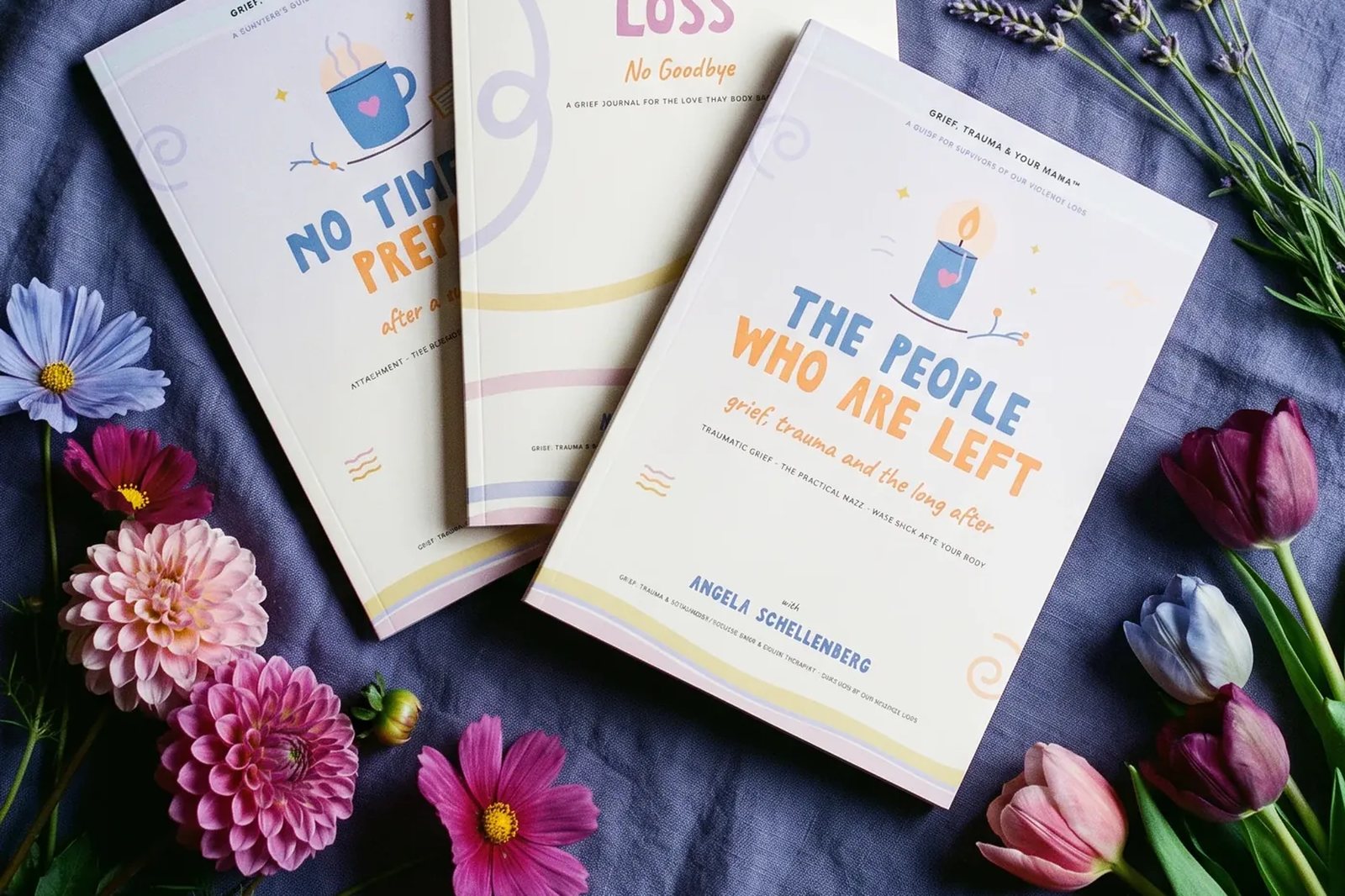
I wrote three things for sudden loss, and The Sudden Loss Set holds all three for $29.
- No Time to Prepare, a 29-page survivor’s guide to sudden, traumatic loss. It covers grief and shock and the first weeks, with pages to write in.
- No Goodbye, an 82-page guided journal for people who lost someone without warning, in seven rooms to move through at their own pace.
- The People Who Are Left, a 32-page guide for survivors of gun violence loss. It covers traumatic grief, police and court, reporters, and ways back into your body. I wrote it as a therapist who lost her father to gun violence.
For the body, the first section of my Gifts for Grievers list is trauma tools for a panic attack.
What if their person died by suicide?
Everything here still applies. Say the person’s name. Ask about their life: what they loved, what was funny about them. How they died is one part of their story.
What should I leave unsaid?
Questions about how it happened. “At least it was quick.” Theories about what could have been done. Your friend is already asking those questions at three in the morning. What helps from you is steadier: “I am so sorry. I am here. I will come back tomorrow.”
References: Kristensen, P., Weisæth, L., & Heir, T. (2012). Bereavement and mental health after sudden and violent losses: A review. Psychiatry, 75(1), 76–97.
Frequently asked questions
What do you say to someone after a sudden death?
Keep it short and true: I am so sorry. I am here. Then say the person’s name and offer one specific thing, like bringing dinner on Thursday.
What is a helpful gift after an unexpected death?
In the first weeks, practical help: meals, rides, phone calls, childcare. Later, something written for sudden loss, such as the No Goodbye journal or the Sudden Loss Set.
Should I ask how the person died?
No. Let your friend decide what to tell you and when. If they want to tell the story, listen, even if you have heard it before.
How long does shock last after a sudden death?
It differs from person to person, and it can come and go for weeks or months. Trouble sleeping, eating and concentrating is common early on. A grief and trauma therapist can help when the body stays on high alert.
Keep reading
What do I say when I do not know what to say to someone who is grieving?
What do I send someone for their first holidays without their person?
Three guides for a death with no warning
The Sudden Loss Set
No Time to Prepare for the first weeks, the No Goodbye journal for the months after, and The People Who Are Left for a loss to gun violence.
See the set · $29
Angela Schellenberg
Angela is a licensed trauma and grief therapist, attachment-focused EMDR specialist, and trained Mother Hunger® Facilitator (a framework created by Kelly McDaniel). She hosts the Grief, Trauma & Your Mama podcast and leads EMDR intensives and equine-assisted retreats at Shakti Ranch in Malibu. Licensed in California, Washington, Arizona, and Florida. Work with Angela →