
Angela Schellenberg
Say their person’s name, say you are sorry, and say you are staying. “I am so sorry about your mom. I am here, and I will keep checking in.” That is enough. A short, true sentence does more than a perfect one.
Why is it so hard to know what to say?
Because we want to fix it, and death cannot be fixed. So we reach for a sentence that sounds like a solution, or we say nothing and stay away. Most people who disappear from a grieving friend’s life did not stop caring. The words ran out, and staying away felt easier.
What do grieving people say helped?
Researchers asked 94 bereaved people which kinds of support had helped and which had not. What helped most was being able to talk about their feelings, and being with others who had been through a similar loss. What they named as unhelpful was advice, and being encouraged to recover (Lehman, Ellard & Wortman, 1986).
What your friend needs from you is to stay and listen.
What can I say?
- “I am so sorry.”
- “I keep thinking about her laugh.” Any true memory, one line.
- “Tell me about him.”
- “I am bringing dinner Thursday at six.”
- “You do not have to answer this. I am thinking of you and of Maria today.”
- “I do not know what to say. I am here.”
What should I leave out?
- “Everything happens for a reason.” It asks your friend to agree that the death made sense.
- “She is in a better place.” Unless you know your friend believes it.
- Any sentence that starts with “at least.”
- “Let me know if you need anything.” It hands your friend the job of asking. Offer one specific thing.
- “You are so strong.” It can make it harder to fall apart in front of you.
What if I already said the wrong thing?
Go back. “I said something clumsy last week and I have been thinking about it. I am sorry. I am still here.” Most friendships survive a clumsy sentence. Silence is what ends them.
How long do I keep saying it?
Longer than you think. Text on the birthday, the anniversary, and the ordinary Tuesday in month five. Use the name every time.
Is there something I can keep on hand?
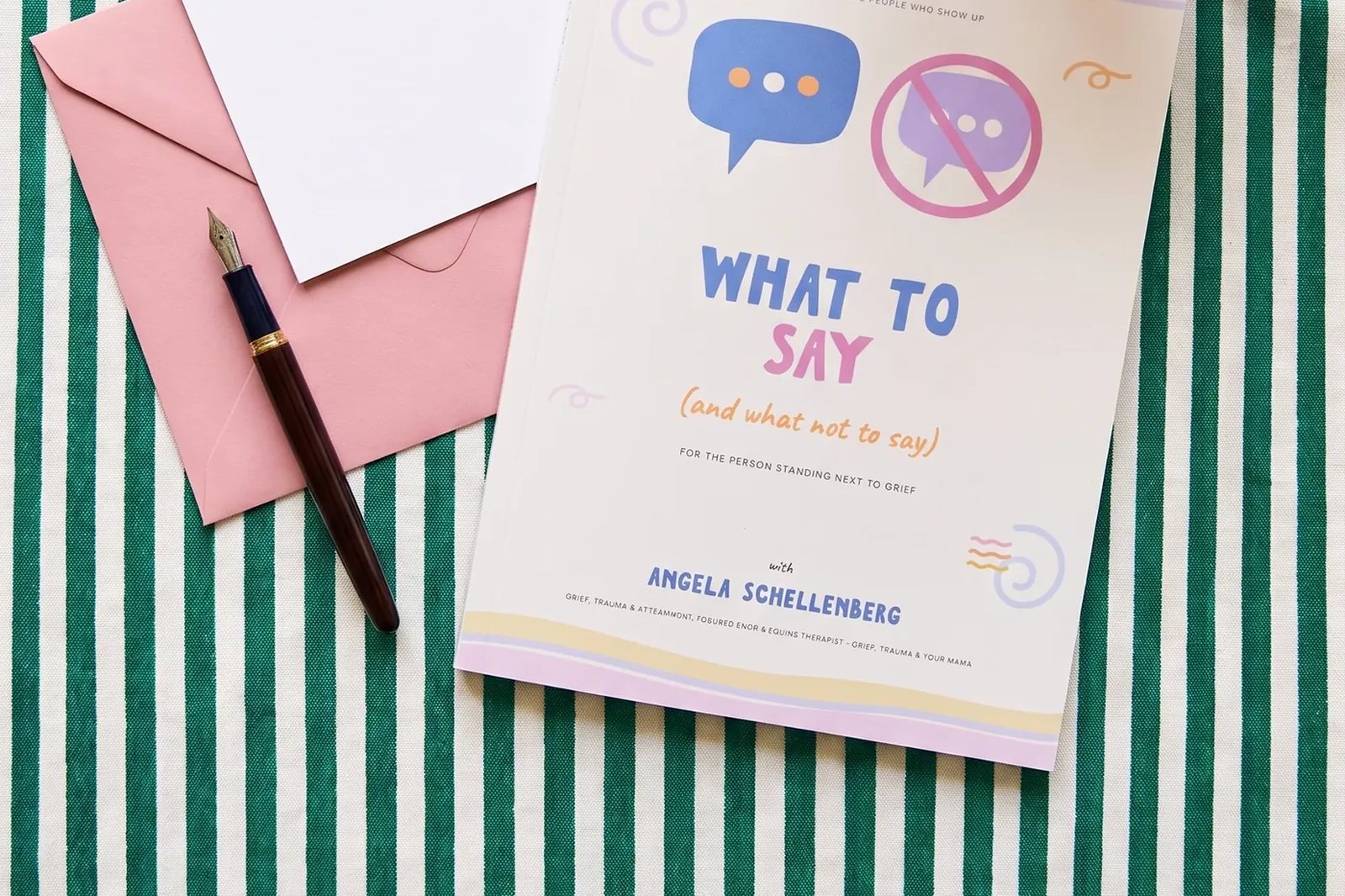
I wrote What to Say (and What Not to Say) for the friends and family of someone who is grieving. It is a 25-page guide with the lines that help, a chapter on “everything happens for a reason,” one on faith, and a card you can cut out. It is $9.99. The Holiday Set pairs it with The Hardest Season for $14.99.
References: Lehman, D. R., Ellard, J. H., & Wortman, C. B. (1986). Social support for the bereaved: Recipients’ and providers’ perspectives on what is helpful. Journal of Consulting and Clinical Psychology, 54(4), 438–446.
Frequently asked questions
What is the best thing to say to someone who is grieving?
Say you are sorry, say the name of the person who died, and say you are staying. For example: I am so sorry about your dad. I am here, and I will keep checking in.
What should you not say to someone who is grieving?
Leave out everything happens for a reason, she is in a better place, sentences that start with at least, and let me know if you need anything. Offer one specific thing instead.
Is it okay to say I do not know what to say?
Yes. It is honest, and it keeps you in the room. Follow it with I am here.
What if I said the wrong thing to a grieving friend?
Go back and say so. A short apology and I am still here repairs most clumsy sentences.
Keep reading
What do I send someone for their first holidays without their person?
What do I get a friend whose mom just died?
What do I give someone who is grieving when flowers feel wrong?
For the people around someone grieving
What to Say (and What Not to Say)
A 25-page guide with the lines that help and a card you can cut out.
See the guide · $9.99
Angela Schellenberg
Angela is a licensed trauma and grief therapist, attachment-focused EMDR specialist, and trained Mother Hunger® Facilitator (a framework created by Kelly McDaniel). She hosts the Grief, Trauma & Your Mama podcast and leads EMDR intensives and equine-assisted retreats at Shakti Ranch in Malibu. Licensed in California, Washington, Arizona, and Florida. Work with Angela →