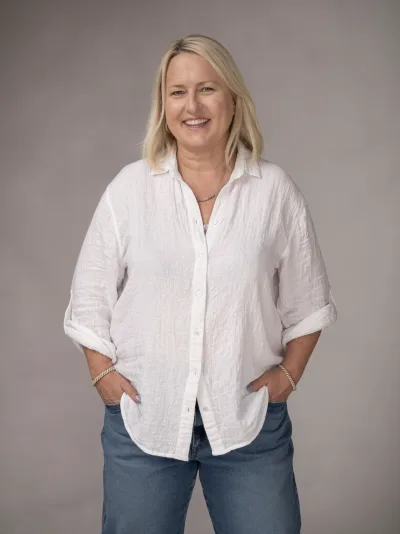
Angela Schellenberg
Losing your mother in your 50s is bigger than people expect because it is not one loss. It is the end of a long caregiving stretch, the moment you become the oldest generation, and an attachment rupture that arrives alongside menopause, an emptying house, and old sibling roles. “She was old, it was expected” describes the timing, and says nothing about the size.
Why does losing your mother in your 50s feel so much bigger than expected?
You are a competent adult. You have raised children, run a household or a company or both, buried other people. You expected to be sad when your mother died. You did not expect to find yourself sitting in the car outside the grocery store unable to go in, because they moved the tea to a different aisle and that was the thing that finally did it.
The size of this grief surprises almost everyone who goes through it. Part of the reason is simple math. You had her for fifty-some years. That is a long attachment. Your nervous system has been organized around her existence longer than it has been organized around anyone else on earth. Even if the relationship was difficult, she was the oldest fixed point in your life, and the body does not release fixed points easily.
The other part is that this loss rarely arrives alone. In your 50s it tends to land on top of caregiving exhaustion, hormonal change, children leaving, siblings who are suddenly strangers, and the first real awareness of your own mortality. The grief is not too big. It is carrying a lot.
Why does “she was old, it was expected” not make it easier?
Because expected and prepared are not the same thing. You can know for a decade that your mother will die, watch her get smaller in the hospital bed, sign the hospice paperwork yourself, and still be undone by the actual absence. Knowledge lives in the mind. Attachment lives in the body. The body does not do arithmetic about a reasonable lifespan.
The phrase also carries a quiet instruction. It says: this grief should be modest. Be grateful. Move along. Women in their 50s are very good at following that instruction, because they have spent decades being the one who copes. So the grief goes underground. It comes out as insomnia, as irritability with a spouse, as a flatness that gets blamed on hormones, as a sudden inability to care about work that used to matter.
I would say this instead. It was expected, and it is enormous. Both are true. You do not have to choose one to be allowed the other.
What does it mean to become the oldest generation?
When your mother dies, especially if your father is already gone, something shifts that is hard to describe until it happens. There is no longer anyone above you. Nobody is standing between you and the end of the line. You are now the person the family calls with the question about the recipe, the birth date, the name of the town where grandpa was born. And you realize how many of those answers died with her.
This is an identity reorganization, not just a sad fact. For your whole life you were somebody's daughter. Even at 55, even with grandchildren, that was a role you occupied. Now it is past tense. The women I work with often describe a strange unrootedness. They are still mothers and wives and professionals, and yet the floor feels different. They have become the elder without ever quite feeling ready.
The ordinary moments give it away. The Sunday afternoon that used to belong to the phone call. The recipe card in her handwriting that you cannot read the last line of. The reflex to buy her the thing she liked, still alive in your hand in the store.
Why did my grief start before she died?
If you cared for your mother through illness or dementia, you have probably been grieving for years. This is sometimes called anticipatory grief, but the name makes it sound tidier than it is. What actually happens is that you lose her in pieces. The woman who knew your name. The one who could walk to the mailbox. The one who could be left alone. Each loss is real, and none of them came with a funeral.
Caregiving also does something to the attachment. The roles reverse. You become the mother, managing medications, choosing the facility, holding her hand through things she would once have held yours through. When she finally dies, you lose both the mother you had and the dependent you had become responsible for. That double loss is why so many caregiving daughters feel relief and devastation at the same time, and then feel ashamed of the relief.
The relief is not a betrayal. It is a nervous system that has been on duty for years finally being told it can stand down. It is allowed. So is the exhaustion that shows up a month later, when the adrenaline of the last stretch wears off and you realize how long you have been running.
Why is this landing at the same time as menopause and the empty nest?
Because the 50s stack. Your mother's death often arrives in the same handful of years as menopause, children leaving home, and a body that no longer recovers the way it did. Each is a loss in its own right, and each changes how the nervous system regulates. Together they can make it feel as though the ground itself has shifted.
Menopause is especially relevant, because it changes sleep, mood, and the body's capacity to buffer stress at exactly the moment grief asks for all three. Women are frequently told their grief is hormones, or their hormones are grief, and both dismissals miss the point. The loss and the transition are happening in the same body. They amplify each other. That is not a flaw in you. It is timing.
The empty nest adds one more layer. You have just finished being needed daily by your children. Then you finish being needed by your mother. A woman who has spent thirty years organized around other people's needs can find herself, at 54, standing in a quiet house wondering who she is when nobody needs her. That question deserves real attention. It is not a problem to be solved by staying busy.
Why are my siblings and I falling apart over this?
Because a mother's death puts every sibling back in their childhood chair. The responsible one is responsible again. The baby is the baby. The one who left is judged for leaving. The one who stayed and did the caregiving is exhausted and resentful and cannot say so. Old roles that had softened over decades snap back into place the moment there is an estate to settle or a service to plan.
The house is often where it breaks. Who gets the ring. Who takes the photographs. Who thinks the other one is being greedy or sentimental or cold. These fights are almost never about the objects. They are about who was loved, who was seen, who did the work, and who gets to say what she meant. Grief does not make people reasonable. It makes them young.
If your siblings are grieving in a way you do not recognize, that does not mean they loved her less. Attachment histories differ inside the same family. Each of you had a different mother, in a sense, and each of you is losing a different person. Some distance while everyone finds their footing is not failure. Permanent estrangement over the china is a loss on top of a loss, and naming what the fight is actually about can sometimes prevent it.
What actually helps?
You have spent your whole life being the one who copes. The first thing that helps is letting that be less true for a while.
- Stop measuring the grief against her age. It is allowed to be as large as it is.
- Name the losses separately. The mother, the caregiving role, the daughter identity, the answers that died with her. Each one deserves its own attention.
- Let the relief exist without shame. It is a sign of how long you were on duty, not of how little you cared.
- Look at what the grief woke up. If you were the parentified child, or the one whose needs were expensive, that history is grieving too. It gives the size of this its context.
- Work with the body. Menopause, exhaustion, and grief all live in the nervous system. Talking reaches only so far. Somatic and attachment-focused work reaches the rest.
- Give your siblings some grace, and yourself some distance. The chairs are old. Nobody chose them.
The goal is not to get back to how you were before she died. That woman still had a mother. The goal is integration: becoming the elder in a way that carries her forward rather than closing the door behind her. That takes time, and it does not need to be done alone.
Where this work happens
If you would like company in this stretch, there are a few ways to work with me. One-to-one sessions are online. Attachment-Focused EMDR is available virtually for clients in California, Washington, Arizona, and Florida, and it can help when caregiving left moments the body is still holding. On Mondays I work with the horses at Shakti Ranch in Malibu, which is slow, somatic work that suits women who are tired of managing everything with their heads. There is also the Healing with Horses Somatic Grief Retreat in Malibu. None of this needs deciding today. If you want to talk it through, there is a free 15-minute conversation.
Frequently asked questions
Why is losing my mother in my 50s hitting me so hard?
Because it is rarely one loss. It often ends a long caregiving stretch, makes you the oldest generation, and arrives alongside menopause, children leaving, and old sibling roles. Your nervous system has also been organized around your mother longer than around anyone else. A fifty-year attachment does not release quietly, no matter how expected the death was.
Is it normal to feel relief after my mother died?
Yes, especially after years of caregiving. Relief is a nervous system that has been on duty for a long time finally being told it can stand down. It usually sits right beside devastation, and the two do not cancel each other out. Feeling relief is not a sign you loved her less. It is a sign of how long you were carrying her.
Why did my grief start before my mother actually died?
Caregiving through illness or dementia means losing her in pieces, long before the funeral. The woman who knew your name, who could walk to the mailbox, who could be left alone. Each of those losses was real. By the time she dies, you may have been grieving for years, which is one reason the final loss can feel both familiar and far bigger than expected.
Why are my siblings and I fighting since our mother died?
A mother's death tends to put every sibling back in their childhood role. The responsible one is responsible again, the caregiver is exhausted, the one who left is judged. Arguments over the house or the ring are rarely about the objects. They are about who was loved and who did the work. Naming that can lower the temperature.
What helps with grief in your 50s when everything is changing at once?
Stop measuring the grief against her age, and name each loss separately: the mother, the caregiving role, the daughter identity. Let relief exist without shame. Since menopause, exhaustion, and grief all live in the nervous system, work that includes the body tends to reach further than talking alone. Support from someone who understands attachment history can give the size of this its context.
Keep reading
Why is it so hard to grieve a mother I had a difficult relationship with?
Why does grief for my mother get worse over time instead of better?
Take this with you
101 Distress Tolerance Tips is a printable list of small, concrete ways to steady your body when grief is loud. Leave your name and email and I will send it.
If you want the fuller map of what grief does in the nervous system, the Grief & Trauma Workbook is an attachment-focused psychoeducation guide. $14.99, instant PDF.
Working together
When the work needs to happen in the body
Talking about it reaches only so far, which is most of what this page is about. The Equine Resourcing Intensive at Shakti Ranch, a full Monday with the herd, is how that work happens somatically instead. You pick your date right after checkout.
Angela Schellenberg
Angela is a licensed trauma and grief therapist, attachment-focused EMDR specialist, and trained Mother Hunger® Facilitator (a framework created by Kelly McDaniel). She hosts the Grief, Trauma & Your Mama™ podcast and leads Equine Resourcing Intensives and equine-assisted retreats at Shakti Ranch in Malibu. Licensed in California, Washington, Arizona, and Florida. Work with Angela →