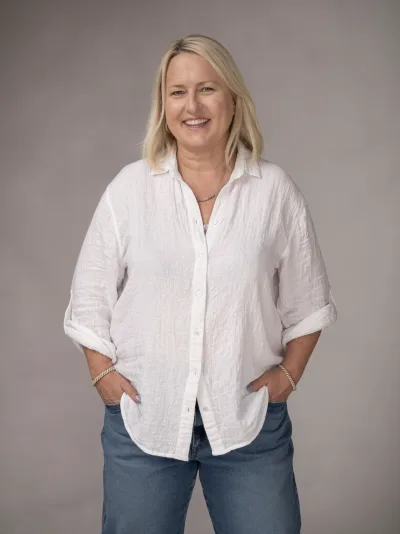
Angela Schellenberg
Losing your mother in your 20s reshapes everything because it removes the person your adult life was being built in relation to. You are launching into work, love, and independence while the attachment that held your sense of home is gone. It is not too early or too much to be this affected, because this is an attachment rupture landing in the middle of an identity that is still forming.
Why does losing your mother in your 20s feel different?
Your 20s are the decade when you are supposed to leave. You move out, you take the first real job, you learn how to pay rent and be in a relationship and cook something other than pasta. Most of that leaving works because someone is still standing where you left from. A mother, even a complicated one, is the fixed point you push off against. When she dies during this decade, the fixed point disappears while you are mid-launch.
Attachment theory has a name for this. A secure base is the person you return to, or imagine returning to, when the world gets hard. In childhood it is literal. In adulthood it is mostly internal. You may have called her once a month and rolled your eyes at her advice. It did not matter. Somewhere in your nervous system she was still the place you could go back to. Losing her at 24 or 27 means losing the base before you finished building your own.
That is why this grief does not feel like sadness alone. It feels like standing on a floor that has been removed. The ordinary moments give it away. You get good news and your thumb finds her name in your phone before your brain catches up. You are in a grocery store and cannot remember whether she used butter or oil in the thing she made every Sunday, and there is no one left to ask.
Why do my friends not understand?
Most people in their 20s have not lost a parent. Their mothers are still texting them about flights and dentist appointments. They want to help you, and they have no template for it. So they say the things people say. She would want you to be happy. At least you had her for as long as you did.
You are probably doing well on the outside. You go to work. You show up to the birthday dinner. You laugh at the right moments. Inside, you are a different age than everyone at the table. You have crossed into knowledge they do not have yet, and you cannot un-know it. That gap is one of the loneliest parts of early mother loss. It is not that your friends are unkind. It is that you are now carrying something they will not understand for another twenty or thirty years.
This can also change how you attach. Some women pull in close to the one or two friends who can sit with it. Others go quiet and competent, because explaining is exhausting. Neither is wrong.
What happens to the milestones she will not see?
Grief in your 20s is not one event. It is a long series of doors she will not walk through. The graduation. The first apartment with your own name on the lease. The engagement, the wedding, the pregnancy test, the baby who will only know her from photographs. Each one arrives with a small, quiet absence built into it.
People sometimes expect the milestones to get easier. Often they get more complicated. A wedding without your mother is not just a sad day. It is a seating chart with a hole in it, and a hundred moments where you are supposed to be glowing and you are also looking for her in the room. New motherhood without your own mother is its own specific ache. You want to ask her what you were like at three months. You want her to tell you that you are doing fine. The question has nowhere to go.
What helps is expecting them, so they do not feel like proof that you have failed to move on. You did not fail. The attachment is still real. The milestones are simply where it shows.
Why does it feel like I do not know who I am anymore?
Your 20s are when identity consolidates. You are working out what you believe and who you are apart from your family. A mother is part of that equation even when the relationship is hard. You define yourself with her, or against her, or somewhere in between. When she dies, one side of the equation goes blank.
Many women describe a specific disorientation. They do not know how to answer small questions anymore. Where is home for the holidays. Who do I call when I get the job. Who remembers that I was afraid of the dark until I was nine. Some of the record of your own life lived in her. Losing her means losing a witness to your history at the exact moment you were trying to write the next chapter.
This is what I mean when I say grief reorganizes identity. It is not a figure of speech. Your sense of self was built inside a relationship, and the relationship has changed shape. You are not becoming someone else. You are learning who you are without her watching. That takes longer than anyone tells you.
Am I too young to be this affected?
No. Age does not protect the attachment system. If anything, losing your mother young means the loss lands in a nervous system that was still leaning on her more than it knew.
Women in their 20s often minimize their own grief. They tell themselves that other people have it worse. That is a form of self-abandonment, and it usually comes from somewhere. If you grew up learning that your needs were expensive, you will grieve the same way. Quietly. Efficiently. On a schedule that does not inconvenience anyone.
The body does not honor that schedule. It shows up as trouble sleeping, a jaw that never fully unclenches, a flatness that gets called burnout, panic in the car for no reason you can name. Those are not signs that you are weak or dramatic. They are signs that a primary attachment was ruptured and your system is still adjusting to the absence.
Is it normal to still be grieving years later?
Yes. Grief does not end. It changes position. In the first year it is in front of you, blocking the view. Later it moves to the side, or behind, and you can go weeks without noticing it. Then a song, a smell, a stranger who tilts her head the way your mother did, and it is in front of you again for an afternoon.
This is not a setback. It is how a nervous system holds a person who mattered. What can make later grief harder is that the world has moved on. Nobody sends flowers in year four. So you carry it alone, and carrying it alone is what makes it heavy.
One more thing deserves naming. New losses wake up old ones. A breakup at 29, a friend moving away, a job that ends badly. Each of these can reopen the mother loss, because your nervous system files them in the same place. If your grief seems to come back bigger than the thing that set it off, that is usually why.
What actually helps?
Not fixing it. The women who fare best are not the ones who process it fastest. They are the ones who let it take the space it needs and find places where it can be witnessed.
- Let a few people know the real size of it. Not everyone. One or two who can hear it without flinching. Being seen accurately settles the nervous system more than any technique.
- Keep the ordinary rituals. The Sunday call can become a Sunday walk. The recipe can be made badly and eaten anyway. Continuity matters to the body.
- Expect the milestones. Plan for her absence at the wedding or the birth the way you plan for weather. It will not hurt less, but it will not surprise you.
- Learn your own history. If you grew up managing her moods, or being the competent one, that pattern is grieving too. Understanding it gives the loss context.
- Work with the body, not only the story. Talking helps. It also reaches only so far. Somatic and attachment-focused work meets the part of you that is still scanning for her.
Integration is a better word than recovery here. You are not going to get over your mother. You are going to build a life that has room for her absence in it, and eventually the absence will feel less like a hole and more like a part of the floor you know how to walk on.
Where this work happens
If you want company in this, there are a few ways to work with me. One-to-one sessions happen online, so you can be wherever you are. Attachment-Focused EMDR is available virtually for clients in California, Washington, Arizona, and Florida, and it is a good fit when the loss has left images or moments that will not settle. On Mondays I work with the horses at Shakti Ranch in Malibu, which is somatic work for people who are tired of talking. There is also the Healing with Horses Somatic Grief Retreat in Malibu. None of this is required. If you would like to talk first, there is a free 15-minute conversation, and you can decide from there.
Frequently asked questions
Is losing your mother in your 20s harder than losing her later?
It is different rather than harder. In your 20s the loss lands while identity, career, and adult relationships are still forming, and while most of your peers still have their parents. That combination can leave you carrying a large grief without a social world that recognizes it. Later losses have their own weight, but early loss removes a secure base before you have finished building your own.
Why do I feel older than my friends since my mother died?
Early mother loss gives you knowledge most people your age do not have yet. You have learned that the people who hold your life can disappear, and you cannot unlearn it. That creates a real gap at the table, even with friends who love you. It is not that they are unkind. They simply have not crossed into that knowledge, and you have.
Why do the milestones make my grief worse instead of better?
Milestones are where the attachment shows. A wedding, a first apartment, a new baby: each one contains a moment your nervous system expected to share with her. Rather than proof that you have not moved on, the ache at these moments is evidence that the bond is still real. Expecting her absence in advance can make those days less disorienting.
Is it normal to still be grieving my mother years later?
Yes. Grief does not end. It moves position, from in front of you to beside you, and it steps forward again on anniversaries or in ordinary moments. New losses in your 20s and 30s can also reopen the mother loss, because the nervous system stores them in the same place. Ongoing grief is not a failure to heal. It is how attachment works.
What kind of support helps most after losing a mother young?
Support that works with the body as well as the story. Talking helps, and so does being witnessed by one or two people who can hear the real size of the loss. Attachment-focused and somatic approaches reach the part of the nervous system that is still scanning for her. Free, low-pressure options like a community or a short first conversation are a reasonable place to start.
Keep reading
Why does grief for my mother get worse over time instead of better?
Why am I still not over my mother's death even after years of therapy?
Take this with you
101 Distress Tolerance Tips is a printable list of small, concrete ways to steady your body when grief is loud. Leave your name and email and I will send it.
If you want the fuller map of what grief does in the nervous system, the Grief & Trauma Workbook is an attachment-focused psychoeducation guide. $14.99, instant PDF.
Working together
When the work needs to happen in the body
Talking about it reaches only so far, which is most of what this page is about. The Equine Resourcing Intensive at Shakti Ranch, a full Monday with the herd, is how that work happens somatically instead. You pick your date right after checkout.
Angela Schellenberg
Angela is a licensed trauma and grief therapist, attachment-focused EMDR specialist, and trained Mother Hunger® Facilitator (a framework created by Kelly McDaniel). She hosts the Grief, Trauma & Your Mama™ podcast and leads Equine Resourcing Intensives and equine-assisted retreats at Shakti Ranch in Malibu. Licensed in California, Washington, Arizona, and Florida. Work with Angela →