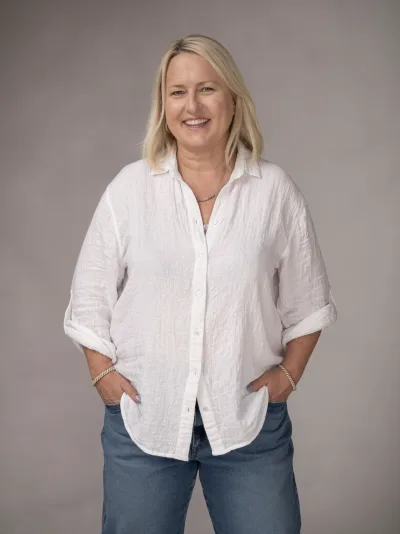
Angela Schellenberg
After a sudden death, their things are not just belongings. They are the middle of a life that stopped without warning: the book face down at page 212, the load still in the washer, the reminder for next Tuesday. You do not have to decide anything about them right away. Handle what truly can't wait, and let the rest stay where it is until you are ready.
Why do their unfinished things hurt so much?
Ask anyone what is left in a house after a death and they will say the clothes. Ask someone whose person died without warning and she will say the book, face down on the nightstand. Page 212.
The crossword, half done, in their handwriting. A reminder on their phone for next Tuesday. The package they ordered, arriving after the funeral.
When a death is expected, people often have time to finish things, give things away, say what they meant to say. A sudden death stops a life mid-sentence. Everything they were in the middle of stays right where they left it, and every one of those things says the same thing: they planned to come back.
Your body reads each one as "they'll be right back." Then it has to learn again that they won't. Grief researcher Mary-Frances O'Connor describes the brain holding two things at once: the knowledge that they died, and an older, deeper expectation that they are still out there somewhere. Every unfinished thing pulls on that second part. That is attachment, still doing its work.
What has to be done right away, and what can wait?
Very little has to be done right away, even though it can feel like everything is urgent. It can help to sort things into two piles in your head.
What usually can't wait
- Anything alive or perishable: pets, plants, food in the fridge.
- Mail, bills and anything with a legal or money deadline.
- Their phone, email and accounts, if they need to be kept active or closed.
What can wait as long as you need
- Their clothes, their books, their desk, their side of the bed.
- The bookmark. The crossword. The note on the fridge.
- Deciding what to keep, what to give away, and who gets what.
Many grief counselors suggest holding off on big, permanent decisions in the first months when you can. That includes clearing out a room. You can always give something away later. You can't get it back once it's gone.
Is it strange that I can't move anything?
No. Leaving things exactly where they were is one of the most common things people do after a sudden death. The washer gets run around the load. The coat stays on the chair.
Grief researchers call the ongoing connection we keep with the people we've lost "continuing bonds." For a long time the advice was to let go and move on. The research since has shown that staying connected is normal, and for many people it is part of how they heal. Keeping their things where they left them can be one way of doing that.
You can leave the bookmark where it is, for as long as you need.
When you are ready, a few gentle ways to start
- Take a photo first. Before you move anything, photograph the nightstand, the desk, the kitchen counter just as they left it. You will always have it.
- Start with something small. One drawer. One shelf. Not the closet.
- Keep one thing as it is. Some people keep the book with the bookmark still in it, or the last grocery list, in a box or a frame.
- Ask for help with the hard parts. Someone else can run the washer or open the package that arrived after the funeral.
- Don't let anyone rush you. If family members feel differently about the timing, it is fine to say, "Not yet."
When their things bring back the day they died
Sometimes the objects don't bring back them. They bring back the moment you found out. If you can't walk past their room without your body going into shock, or the sight of their shoes by the door takes you straight back to the phone call, that is trauma in the body, not only grief.
That can be helped. EMDR therapy is built to reprocess what happened so the reminders stop pulling you back into that day. You can read more about grief after a sudden or traumatic death and about EMDR for grief.
If your person died without warning and you want something to start with on your own, I wrote No Goodbye, a journal for exactly this kind of loss. If you are struggling right now, call or text 988, any time.
References: Klass, D., Silverman, P. R., & Nickman, S. L. (Eds.). (1996). Continuing Bonds: New Understandings of Grief. O'Connor, M.-F. (2022). The Grieving Brain.
Frequently asked questions
How long should I wait before going through their things after a sudden death?
There is no deadline for most of it. Many grief counselors suggest holding off on big, permanent decisions in the first months when you can. Handle what truly cannot wait, like food, pets, mail and anything with a legal or money deadline, and let the rest stay where it is until you are ready.
Is it normal to leave their things exactly where they left them?
Yes. Leaving the book on the nightstand or the coat on the chair is one of the most common things people do after a sudden death. Those objects hold the last moments of an ordinary life. Keeping them is a way of keeping the bond, and it is not a sign that you are stuck.
What if I can't go into their room at all?
Avoiding the room for a while is common, especially after a sudden or violent death. If months go by and the room, or the objects in it, bring back the shock as if it were happening again, that can be a sign of traumatic grief. A trauma therapist, including one trained in EMDR, can help.
Keep reading
Why does a smell bring back someone who died?
Grief after a sudden or traumatic death: why it is different, and what helps
Something to write in
No Goodbye
A guided journal for people who lost someone without warning, to move through at your own pace.
Read more · $14.99
Angela Schellenberg
Angela is a licensed trauma and grief therapist, attachment-focused EMDR specialist, and trained Mother Hunger® Facilitator (a framework created by Kelly McDaniel). She hosts the Grief, Trauma & Your Mama podcast and leads Equine Resourcing Intensives and equine-assisted retreats at Shakti Ranch in Malibu. Licensed in California, Washington, and Arizona. Work with Angela →