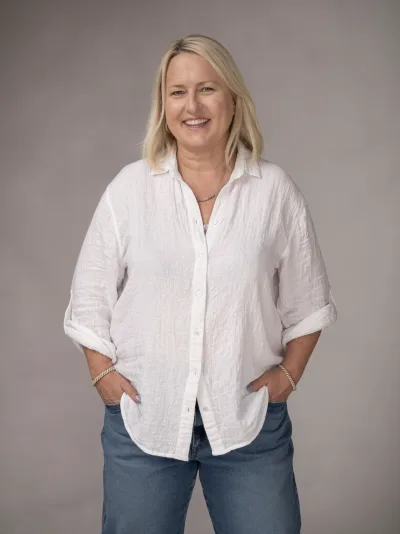
Angela Schellenberg
EMDR can be intense, and the word is doing two different jobs. It can mean the work reaches something deep, which is true. It can also mean you will be flooded or made to relive the worst of it, which does not have to be true. In attachment-focused EMDR, resources are built before any memory is touched, the pace is yours, and you can stop at any point.
What do people mean when they ask if EMDR is intense?
Underneath the question there is usually a fear, and it is a reasonable one. You have heard that EMDR goes back to the memory. You have spent years building a life on top of that memory. The worry is that a session will open it up, that you will be overwhelmed in front of a stranger, and that you will leave in worse shape than you arrived. Some people also worry about being retraumatized, which is a real clinical concern and not a sign of weakness.
Those fears come from a picture of EMDR that is mostly about the reprocessing phase, the part where a memory is active and bilateral stimulation is running. That phase exists. It is also a small part of the whole. What surrounds it is preparation, pacing, and a relationship that is doing a lot of the holding. When people say EMDR was too much for them, it is often because that surrounding structure was thin.
So the honest answer is that EMDR is only as intense as the frame around it allows. The frame is the point. Attachment-focused EMDR, the model developed by Laurel Parnell that I work in, was built for people whose pain lives in relationship, and it takes that frame seriously.
Why does attachment-focused EMDR start with resourcing before any memory work?
Because a nervous system cannot reprocess what it cannot tolerate. If you go to the memory before your body has something steady to stand on, the memory wins. You get flooded, you leave your body, or you shut down. None of that is processing. It is the original overwhelm happening again.
Resourcing means building a set of inner supports before any memory is touched. In this model that includes a Peaceful Place your body reads as safe, a Container to hold what is not being worked on today, and the figures of support: a nurturing figure, a protective figure, and a wise figure. We install them with slow bilateral tapping, a process Laurel Parnell calls tapping in. For many women grieving or missing a mother, this stage includes building the mother their nervous system needed. Not pretending. Giving the brain the raw material of repair.
Resourcing is not a warm-up to get through so the real work can start. For attachment wounds it is often the most useful part of the work, and some clients spend several sessions here before anything else. When reprocessing does begin, the resources come with us. If a memory starts to pull too hard, we return to them. That is what keeps the work from becoming what you were afraid of.
What do I actually control during an EMDR session?
More than most people expect. You choose what we work on. You can decline a target that does not feel ready. You set the pace, and you can slow it down at any time. You can stop a set of bilateral stimulation by raising a hand, saying stop, or simply going quiet. The stop signal is always yours, and I will not push past it.
You also control the form of bilateral stimulation. In a virtual session that can be guided eye movements, an on-screen tracker, tapping on your own knees or shoulders, or the butterfly hug. Some clients prefer small wireless tapping tabs, one in each hand, which I can control remotely or which you can run yourself between sessions. They are optional. Your own two hands work.
And you never have to tell the story in detail. EMDR does not need the narrative. It needs a target: an image, a body sensation, a belief. You can hold a memory privately and say only what you choose to say. Processing is not the same as talking about it, and for many people that is the single biggest relief.
Will EMDR make me feel worse before I feel better?
Sometimes things stir, and I would rather tell you that plainly than have you discover it alone. During a session your body may do things it has not done in a while. Your chest may get tight. Your eyes may fill. You may feel heat, or a wave of something moving through, or a strange calm that arrives sooner than you expected. Some people yawn a great deal. Some feel sensation in a specific place, a throat or a stomach, and then feel it release. None of this is a sign that something is wrong. It is what a nervous system does when it is finally allowed to finish a response it had to interrupt years ago.
We close every session in a settled state. That is not a courtesy. It is part of the method. Before we end, whatever we opened goes into the Container, we return to the Peaceful Place, and we find language for what shifted. You do not leave with a memory hanging open.
Then there is the tiredness. Feeling drained after EMDR is very common, and clients often ask what it means. It means your brain did real work. Reprocessing draws on working memory and on the same systems the brain uses in REM sleep, and it can leave you feeling the way you feel after a long walk or a day of grief. Rest is appropriate. Plan a light evening after a session when you can. Over the following days you may notice vivid dreams, an old memory surfacing, or a feeling on the move. That is the system continuing what it started, and it usually settles. If it does not settle, you tell me and we adjust the pace.
Who is EMDR not right for yet?
The word yet matters. EMDR is not a first step for everyone, and saying so is part of doing it responsibly. If you are in the middle of an active crisis, if your daily life does not currently have enough stability to absorb a stirred-up week, or if you are still living inside the situation that hurt you, reprocessing can wait. The resourcing work often cannot, and it is available on its own.
It also may not be the right door if you have not yet been able to feel anything at all. Numbness is an adaptation, and it deserves respect rather than pressure. Some women arrive so practiced at over-functioning that their body has not registered a loss as a loss. In that case we go slowly, and the horses in Malibu sometimes reach what a screen cannot. There is no failure in any of this. It is information about where your nervous system is, and the work meets you there.
I will be honest in the first conversation if I think EMDR is not the right fit right now, or if a different level of care would serve you better. It is okay if the answer is not yet.
What does a first session with Angela involve?
No reprocessing. The first session is intake and pacing. We map what you are carrying and what your body has been holding against, and we begin to name possible targets, the memories, beliefs, or losses that have been running quietly underneath. We talk about your history, your supports, and what a stirred-up week would look like for you. Then we begin resourcing, which is where the settling starts.
Sessions are 60 minutes and fully virtual. I am licensed in California, Washington, Arizona, and Florida, so you need to be in one of those states at the time of the session. Online EMDR has been studied since the pandemic, and research reviews show outcomes comparable to in-person care for many people, with EMDRIA publishing formal guidelines for it. Bilateral stimulation travels through a screen without trouble.
Before any of that, there is a free 15-minute conversation. No intake forms. You tell me what you are looking for, I tell you honestly whether this is the right door, and we decide together.
Where this work happens
Attachment-focused EMDR with me is virtual, one to one, and 60 minutes at a time. You can read the full picture, including packages, on the Attachment-Focused EMDR page. For women who want the resources to have somewhere real to live in the body, there is ground-based work with the horses at Shakti Ranch in Malibu, described on the equine-assisted grief work page. Reprocessing itself always stays a virtual session. If you would like to talk it through first, a free 15-minute conversation is available, and there is no obligation on the other side of it.
Frequently asked questions
Is EMDR painful?
It can be uncomfortable in moments, the way any real contact with a hard memory is. It should not be overwhelming. In attachment-focused EMDR you have resources in place before a memory is touched, you set the pace, and you can stop at any point. Every session closes in a settled state. If a session ever feels like too much, that is a sign to slow down, not to push through.
Do I have to talk about my trauma in detail for EMDR to work?
No. EMDR works with a target, which can be an image, a sensation in the body, or a belief, rather than with a full retelling. You can hold the memory privately and share only what you choose. Processing is not the same as talking about it. For many people this is the main reason EMDR feels more possible than years of describing the same event.
Can I stop an EMDR session if it gets to be too much?
Yes, at any moment. You can raise a hand, say stop, or simply go quiet, and the bilateral stimulation ends. We return to your Peaceful Place or your figures of support and settle before deciding what comes next. The stop signal is always yours. Attachment-focused EMDR treats your pacing as part of the method, not an interruption to it.
Why am I so tired after EMDR, and how long does it last?
Tiredness after EMDR is common and usually means your brain did real work. Reprocessing draws on working memory and on the same systems the brain uses in REM sleep. Most people feel it the evening of a session and into the next day. Processing can continue for a few days, sometimes with vivid dreams or a feeling on the move, and it usually settles on its own.
Is EMDR safe to do online?
Yes. Online EMDR has been studied heavily since the pandemic, and research reviews show outcomes comparable to in-person care for many people. EMDRIA has published formal guidelines for remote sessions. Bilateral stimulation works through a screen with guided eye movements, an on-screen tracker, or your own hands. Angela's practice is fully virtual for clients located in California, Washington, Arizona, and Florida.
Keep reading
Why does grief make you physically sick?
Why grief keeps coming back: understanding the attachment connection
Working together
Attachment-Focused EMDR, online
Sixty-minute virtual sessions, one to one, for clients in California, Washington, Arizona, and Florida. Single sessions are $350, with packages of three, six, and ten. The first session is intake and pacing, not reprocessing.
Angela Schellenberg
Angela is a licensed trauma and grief therapist, attachment-focused EMDR specialist, and trained Mother Hunger® Facilitator (a framework created by Kelly McDaniel). She hosts the Grief, Trauma & Your Mama™ podcast and leads Equine Resourcing Intensives and equine-assisted retreats at Shakti Ranch in Malibu. Licensed in California, Washington, Arizona, and Florida. Work with Angela →