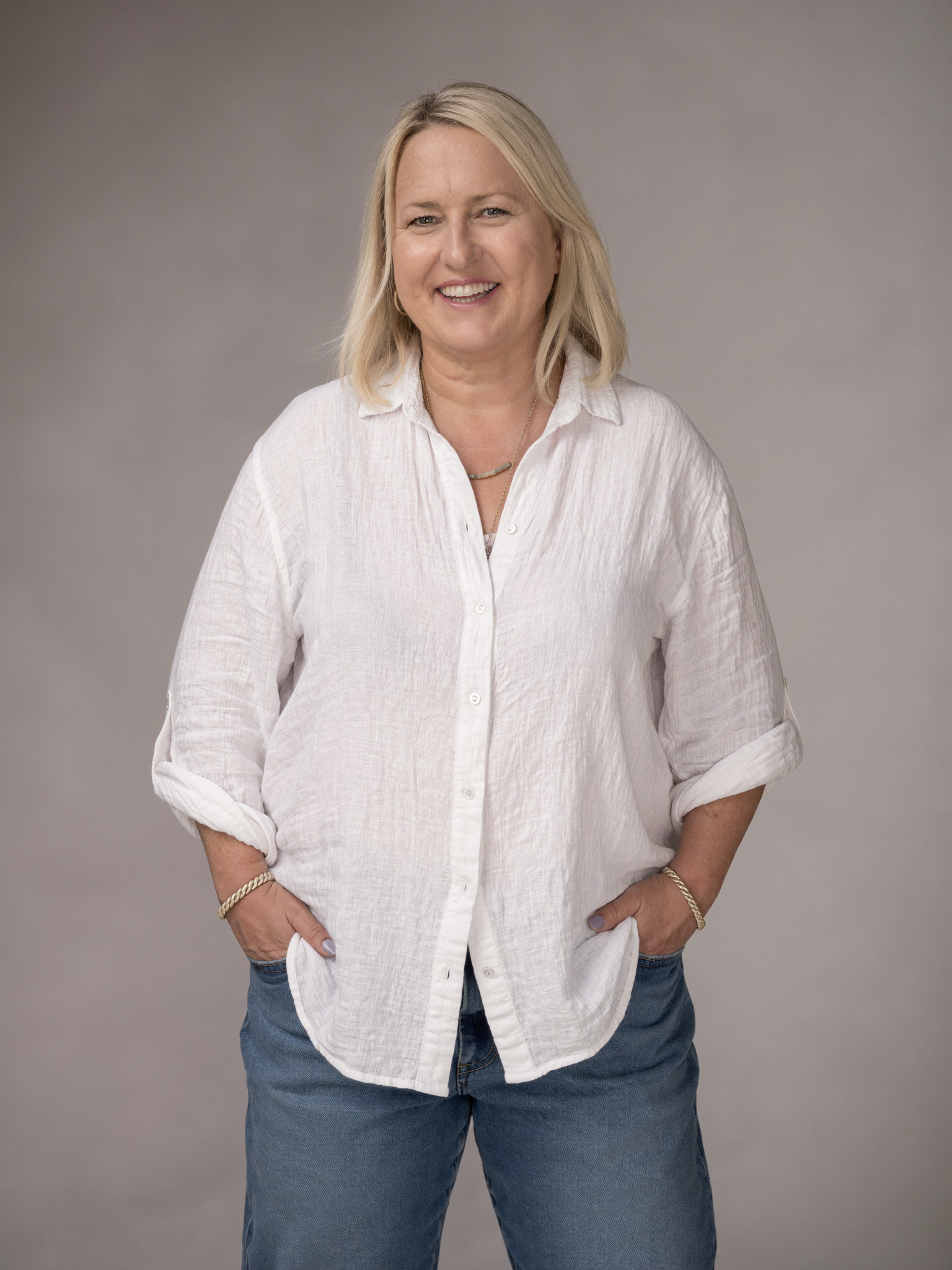
Angela Schellenberg
You can have a mother wound even if your mother loved you. The clearest sign is not a painful memory of her. It is what happens in your body the moment someone offers real care right now. Within seconds, your nervous system produces convincing reasons why that love cannot be real, cannot last, or was not meant for you. That automatic reflex, arriving before you have even drawn a breath, is the wound.
A note on credit: Mother Hunger® is a term and framework created by therapist Kelly McDaniel, author of Mother Hunger® (2021). This article explains her concept in my own words. Learn more at kellymcdaniel.com.
Why does the mother wound show up in love instead of in memories of my mother?
The mother wound lives in the present, not the past, because it is stored in the body's relational reflexes, not in conscious memory. Most women spend years looking in the wrong place. They examine their mother, the relationship, what happened or did not happen. When they find a mother who loved them, who showed up, who tried her best, they conclude the wound cannot be there. They move on, carrying something they cannot name.
The wound is less about what your mother did and more about what your nervous system learned to do the moment attachment became available. What it learned, if the early relational template was disrupted in any way, was this: move away. Produce reasons. Find the exit before the disappointment finds you.
This is why a loving mother does not automatically protect you from a mother wound. Love that was inconsistent, love that came with conditions you could not name, love that was present but not quite attuned, love that required you to be smaller or more manageable first: all of it can install the same reflex. The wound is not a record of whether you were loved. It is a record of how safe it was to receive love. Those are different questions entirely.
What does the mother wound actually look like when someone tries to love me?
It looks like an immediate, involuntary search for the lie in a genuine moment of care. A man holds your face and tells you that you are beautiful, and something in you scans, at once and without your permission, for where he is wrong. A friend calls to check on you and you get off the phone faster than you needed to, vaguely uncomfortable in a way you cannot explain. Your partner says I love you and the warmth arrives for about three seconds before the mental catalogue begins: he does not really know me, this will change, I am too much, I am not enough, people always leave.
None of those thoughts feel like a wound. They feel like good judgment. They feel like you protecting yourself from future pain. They feel, honestly, like the truth. That is the most important thing to understand about the mother wound: it does not announce itself as a wound. It announces itself as accurate self-knowledge. The reasons your nervous system produces are convincing because they were built from real early evidence. They were conclusions, once. They are still running as conclusions. But they are conclusions about a child in a particular early relationship, not conclusions about who you are now or whether the person in front of you can be trusted.
The reflex runs before you can think about it. Someone says something genuinely loving and the body is already moving, deflecting, minimizing, reframing, dismissing, before your conscious mind has had a chance to receive. That is not a thought pattern you developed. That is a nervous system rule installed early, when receiving was the thing that came with the most risk.
Can I have a mother wound if my mother genuinely loved me?
Yes, and this is the part that confuses daughters for years, sometimes decades. A mother wound does not require a mother who was absent, abusive, or unkind. It can develop when a mother loved you fully and was still not quite able to attune. A mother who was depressed, or anxious, or carrying her own unhealed wound. A mother who was present in the room but somewhere else inside it. A mother who meant everything she said and was still not able to read you accurately or consistently enough that your body learned it could count on being met.
Kelly McDaniel, in her book Mother Hunger® (2021), describes the mother wound not as a single injury but as a pattern of unmet needs across three core areas: nurturance, protection, and guidance. Many daughters had some of these and not others. Some had a mother whose love was real but whose presence was emotionally thin. Some had a mother who would die for them and could not truly see them. The wound is not a verdict on the mother. It is a map of what was available and what was not, and what the body had to build around the gap.
What the wound built, in many daughters, is a nervous system that treats genuine love as a signal to tighten rather than soften. Not because love is dangerous. Because the early version of love was unpredictable enough that the body stopped fully orienting toward it. It learned to hold something in reserve. That reserved place, the place that will not quite open, is where the wound lives.
Why does my body produce reasons love cannot be real even when I know it is?
Because those reasons are not generated by the part of you that knows things. They are generated below that, in subcortical, somatic circuitry that was wired before you had language for any of it. Stephen Porges's work on the polyvagal system describes how the body constantly and unconsciously scans for safety and threat in relational environments. That scanning is not voluntary and does not update automatically just because you have spent years in therapy or because you intellectually know that this person loves you and has proven it repeatedly.
The nervous system updates through experience, slowly, with repetition. What that means practically is that even women who know they are loved, who can argue the case clearly in a journal, still feel the reflex fire. The thoughts that arrive, he will leave, this is temporary, she does not actually know me, I am going to ruin this, are not the wound thinking. They are the wound producing language. There is a difference. Thoughts that come from genuine reasoning can be examined and revised. Thoughts that are the wound producing language arrive already formed, already feeling true, carrying a certainty that reasoning does not produce.
One way to begin distinguishing between the two is to notice the speed. Genuine reasoning takes a moment. The wound's language arrives in the first second of receiving something good. If care reaches you and within a breath you are already building the case against it, that speed is worth paying attention to. It is the body responding to the incoming signal, not your mind thinking clearly about it.
What are the specific signs the mother wound is running in my relationships right now?
These are some of the most common ones, offered not as a checklist but as a way of giving shape to something many women have felt for years without words for it.
- You receive a compliment and immediately find something wrong with it, not consciously but before you can stop yourself.
- You feel closest to people when they need you. When they simply love you without needing anything, something in you gets restless.
- You are more comfortable giving care than receiving it, not because you prefer it, but because giving feels safe and receiving feels like standing alone in an open field.
- When someone pursues you consistently, you find them slightly less interesting than before. The certainty of their love triggers something you cannot name.
- You can say I love you before you can let yourself be held and simply breathe.
- When a relationship is going well, you are watching for the turn, not anxiously in the foreground but quietly in the background, the way you keep one window cracked in winter just in case.
- Someone does something genuinely kind for you and you spend the next hour thinking about what you owe them.
These are not personality traits. They are not evidence of a fixed identity or a permanent diagnosis. They are the body doing what it learned to do when receiving required the most management. They are also changeable. Not through deciding to be different. Through slow, repeated, body-level experience of being received that rewrites the rule at the level where it was written.
How is the mother wound different from just being independent or having high standards?
The clearest distinction is the involuntary quality of the response. Genuine independence has flexibility in it; a wound-driven response does not. If you actually prefer Saturday mornings alone, you can usually imagine sharing one with someone you love without your chest tightening. If the thought of being genuinely known by someone produces a particular kind of dread, that is not a preference. That is a protective response.
The second distinction is the grief that sits under it. Women who have healed some of the mother wound often describe the moment they realized that what they called independence was lonely. Not the peaceful kind of alone they actually enjoyed, but a structural loneliness they had stopped questioning because it felt like who they were. That grief is one of the clearest signals that something other than preference is running the pattern.
The third is what happens under stress. Genuine independence holds. Wound-driven independence collapses inward. When something is hard, the woman with a mother wound does not reach for someone. She redoubles the self-sufficiency. She becomes more competent and more alone, because the wound says that reaching is the most dangerous thing she can do.
What do I do when I recognize this reflex in myself?
The first step is to stop arguing with the reflex and start getting curious about it. The moment you recognize that your body is producing reasons love cannot be real, you have already done something important. A small space has opened between you and the automatic response. That space is where everything starts.
You do not have to white-knuckle through the reflex or talk yourself into believing love is safe. Both approaches work through the same cognitive system the wound already knows how to outmaneuver. What actually moves the wound is relational experience, slow and repeated, in which the receiving happens and the feared consequence does not come. The nervous system updates through that. Not through insight alone. Through experience.
This is part of what happens in deep attachment work that addresses the wound at the level where it lives, whether in EMDR processing, in somatic work, or in a therapeutic relationship where the relational experience itself is the medicine. The goal is not to understand the wound intellectually. The goal is to let the body be received, over and over, until received feels familiar rather than dangerous.
Angela Schellenberg works with women carrying this wound as a licensed trauma and grief therapist, trained Mother Hunger® Facilitator (trained by Kelly McDaniel), and attachment-focused EMDR specialist. If you recognized yourself somewhere in this post, that recognition is worth following.
References: Kelly McDaniel, Mother Hunger® (2021). Stephen Porges, The Polyvagal Theory (2011).
Frequently asked questions
Can you have a mother wound if your mother was loving and present?
Yes. A mother wound does not require abuse or neglect. It can develop when love was real but inconsistently attuned, emotionally thin, or came with conditions the child could not name. The wound is a record of how safe it was to receive love, not whether love existed.
What is the most common sign of a mother wound in adult relationships?
The most common sign is an immediate, involuntary production of reasons why genuine care cannot be real, cannot last, or was not meant for you. This reflex fires within seconds of receiving something good and arrives already feeling like accurate self-knowledge rather than a protective response.
Is the mother wound the same as an avoidant attachment style?
They overlap but are not identical. Avoidant attachment describes a relational pattern; the mother wound describes the specific early relational injury at its root. A woman can have an avoidant pattern without anyone having named the maternal wound underneath it, and naming that wound often changes what is possible in treatment.
Why do I feel the mother wound most strongly when things are going well in a relationship?
Because the wound is triggered by the presence of genuine care, not its absence. When a relationship is going well and love is clearly available, the body registers the real risk of receiving it and activates its protective response. The better things are, the louder the reflex becomes.
How is a mother wound different from just having trust issues?
Trust issues usually point toward specific experiences that broke trust with specific people. The mother wound is more structural: it shapes how the nervous system responds to being loved by anyone, not just people who have given you reason for caution. It runs automatically, before trust has had a chance to be evaluated.
Keep reading
I lost my mom and I live in LA. Why can't I find grief support that actually feels like it's for me?
Why does fall feel so heavy before the holidays have even started?
Why do I feel like I never got to grieve? I was too busy handling everything.
Something to write in
Still Her Daughter
A guided journal for daughters after mother loss, written to be used at whatever pace makes sense.
Read more · $29
Angela Schellenberg
Angela is a licensed trauma and grief therapist, attachment-focused EMDR specialist, and trained Mother Hunger® Facilitator (a framework created by Kelly McDaniel). She hosts the Grief, Trauma & Your Mama podcast and leads EMDR intensives and equine-assisted retreats at Shakti Ranch in Malibu. Licensed in California, Washington, and Arizona. Work with Angela →