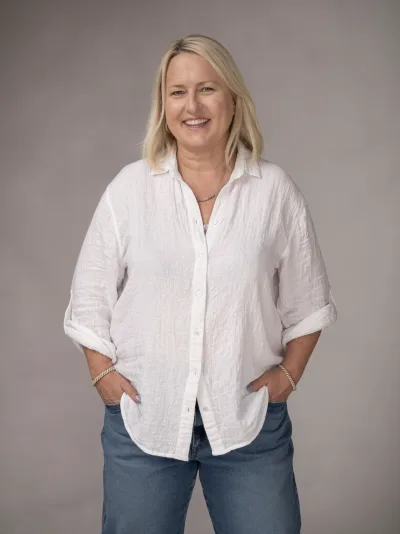
Angela Schellenberg
If you feel inexplicably drawn to horses despite never owning one, your nervous system is likely tracking something specific: a quality of presence that reads your actual emotional state without requiring you to perform being fine. This is co-regulation, a biological process by which one nervous system settles another, and horses offer it without the evaluative layer human relationships carry.
A note on credit: Mother Hunger® is a term and framework created by therapist Kelly McDaniel, author of Mother Hunger® (2021). This article explains her concept in my own words. Learn more at kellymcdaniel.com.
What does it mean when you feel drawn to horses and you cannot explain why?
It means your body is tracking a specific relational quality that your mind has not yet found words for. You have probably tried to explain this to someone, a friend, a therapist, a partner, and watched their face stay polite while you ran out of words. You know it is not about the aesthetics of a horse in a field. You know it is not nostalgia for a childhood you may not even have had. The feeling is more particular than that, and it has followed you for years without dimming.
Most women who describe this pull use nearly identical language: they have always felt it, they cannot justify it, they have sometimes never touched a horse, and still the feeling does not go away. Open land soothes people. Horses are beautiful. Both things are true and neither one explains the specific ache, the sense that something important is waiting near a horse, something they have not been able to reach anywhere else.
What the nervous system is tracking is not appearance or the romance of a pasture at dusk. It is something more precise: the horse's quality of attention. A horse pays attention to your actual state, not the state you are presenting. For women who have spent years being fine in front of people, that distinction is enormous. The body notices it before the mind forms a single coherent thought about why it matters.
What is co-regulation and why would a horse offer it when people cannot?
Co-regulation is the biological process by which one nervous system settles another through proximity and presence, not words, and a horse offers it without the social cost or evaluative layer that human relationships carry. It is not a therapy technique. It is not something you decide to do. It is a feature of mammalian life, and you were designed for it from the beginning, starting with the first relationship you ever had.
When that first relationship was not safe, or was inconsistent in ways that kept you braced rather than settled, the nervous system draws a specific conclusion: other people are not reliable regulators. You learn to manage your own state because reaching toward someone and finding uncertainty is a pain the body eventually stops risking. The hyper-independence that follows is not a personality trait. It is a survival adaptation built on that early knowledge.
A horse does not trigger the same learned wariness. Stephen Porges, whose Polyvagal Theory maps how the nervous system negotiates safety in relationship, identified co-regulation through proximity and presence as the primary mechanism by which mammals settle each other. A horse offers exactly that, without a face reading you for signs of instability, without history between you, without a social contract that carries a cost. There is only a large, calm animal whose nervous system is completely honest, and whose response to yours will be equally honest, without punishment or disappointment attached to it.
For a woman whose nervous system learned early that being truly seen leads to something painful, that combination is not a small thing. It is, in many cases, the first experience of being read accurately without consequence.
Why do some women feel this pull for years before they can name what they are grieving?
Grief that begins early enough, in the attachment relationship itself, is grief that has no original language because it was encoded in the body before words existed for it. This is the particular kind of grief that Kelly McDaniel describes in her framework Mother Hunger®: the hunger that lives in daughters whose early needs for nurturing, protection, and guidance were not consistently met by their mothers. (Mother Hunger® is a term and framework created by Kelly McDaniel, author of Mother Hunger®, 2021.)
What makes Mother Hunger® especially difficult to identify is that it does not announce itself as grief. It arrives as a general unease, a restlessness no particular circumstance explains, a sense of searching for something without knowing what is missing. Women carrying it often describe decades of doing everything right, the therapy, the relationships, the careful self-examination, and still feeling an unfilled space that nothing quite reaches.
The pull toward horses fits inside that pattern. The nervous system is not drawn to an animal. It is drawn to a specific relational experience the earliest attachment relationship did not reliably provide: attunement that does not flinch, presence that does not evaluate, co-regulation that costs nothing to receive. The body tracks that quality wherever it can find it. It has been tracking it, quietly, for years, long before the mind had any language for the wound that created the search.
What actually happens in the body when you stand near a horse?
Your nervous system begins to receive biological signals of safety through a process called cardiac coherence, the measurable synchronization of heart rhythms between individuals in close proximity, which has been documented between horses and humans in sustained proximity. When your heart rhythm begins to entrain with the rhythm of a much larger, calm animal, your own nervous system receives a signal it interprets as: something safe is nearby. The threat-detection layer of your physiology begins to lower, not because you decided it should, but because the body is receiving biological data that supports a shift in state.
When that threat-detection layer lowers, what moves into awareness is whatever has been held beneath it. For many women, that is grief. Not grief they are managing or organizing or preparing to discuss, but grief in its raw, pre-language form. The kind that arrives as a change in breathing before it arrives as a thought. The kind that surfaces as tears before any reason for the tears is clear.
This is why several women who come to equine-assisted retreats frightened of horses find that the fear turns out to be useful rather than a problem. The fear is honest. The horse reads it honestly. The negotiation between those two honest states, without performance, without explanation required, is already a form of contact that word-based work cannot replicate on its own.
Nobody is asking you to name what you are grieving when you stand at the fence. Your body is already in conversation. The mind will find language for it eventually, sometimes hours later, sometimes the following morning, sometimes not until you are home and something small breaks you open in the kitchen. The sequence is correct either way.
Does feeling inexplicably drawn to horses mean something is wrong with me?
No. It means something in you went looking for what it needed and found a direction that made sense to the body even when the mind could not explain it. The women who describe this pull most vividly are often women who are very good at being fine. They have built capable lives. They have managed their grief inside ordinary days for a long time. They have tried to talk about what they carry in rooms designed for exactly that, and still felt a layer underneath that no conversation reached.
The nervous system is specific about what it needs. It is not waiting for the right words or the right framework. It is waiting for a relational experience, presence without evaluation, attention without cost, co-regulation without social debt, that restores something the earliest relationship either could not offer or offered too briefly before it was gone. The pull toward horses is the body pointing toward that experience. That is not a symptom. That is intelligence.
If you have felt this pull for years and have never been able to explain it to anyone's satisfaction, including your own, this is one explanation that may fit. Not because it is poetic, but because it matches what the nervous system actually does when it is searching for co-regulation it never fully received and has never stopped needing.
What can equine-assisted grief work offer that traditional therapy cannot?
Equine-assisted grief work reaches attachment wounds that predate language, which talk therapy alone cannot structurally access because those wounds live in somatic and subcortical memory rather than in narrative. Traditional talk therapy is built on language. It works through narrative and cognition, through the story you construct about what happened and what it meant. That work is real and it reaches many layers of grief. But attachment grief encoded early in life, before language existed for it, lives in a part of the body that narrative cannot reach on its own.
Equine-assisted grief work does not ask you to tell the story. It places you in proximity to a large, honest animal whose entire orientation toward you is based on what your nervous system is actually doing, not what you are saying or how you are holding your face. You cannot manage your way through that. The skill you have spent years perfecting, being fine in front of people, simply does not apply. Not because the horse challenges it or calls it out, but because the horse is not interested in it at all. It is interested in something truer, and your body knows the difference.
That gap, between the self you present and the state your nervous system is actually in, is often exactly where grief lives. When a horse's honest attention meets that gap without judgment, without flinching, without any opinion about how long it has been, something in the body frequently moves that has not moved anywhere else. That is not metaphor. That is the physiology of co-regulation meeting an attachment wound that has been waiting, sometimes for decades, for an environment where it is finally safe enough to surface.
At Shakti Ranch in Malibu, the retreat I lead is not a riding retreat. You do not need experience with horses. You do not need to know what you are grieving before you arrive. You need only to show up with the body that has been carrying this, which you have already been doing for years.
References: Porges, S. W. Polyvagal Theory: foundational framework cited for co-regulation through proximity and presence. McDaniel, K. (2021). Mother Hunger®. New World Library. Mother Hunger® is a registered framework created by Kelly McDaniel.
Frequently asked questions
Can I benefit from equine therapy if I have never been around horses or am afraid of them?
Yes, and in some cases the fear itself becomes part of the work. A horse reads your actual nervous system state, including fear, without judgment or punishment, and the process of negotiating that fear honestly, without having to manage how you appear, can open something in the body that more familiar environments do not reach. Several women arrive at equine retreats frightened and find that the fear turns out to be useful rather than a barrier.
Is the pull toward horses connected to grief even if I have not experienced a major loss?
Grief is not limited to death. The loss of the mother you needed, the absence of consistent attunement, the rupture of an early attachment: all of these are losses the body registers and searches to heal even without a funeral, a death date, or cultural permission to call them grief. The pull toward horses often shows up in women carrying exactly this kind of pre-language, unwitnessed grief, the kind that has no clear beginning and no social script.
Why does this pull feel so urgent even when nothing in my life has recently changed?
The nervous system operates outside the timeline the mind tries to impose on grief. It does not wait for a triggering event to resurface what it has been carrying. Sometimes the urgency arrives precisely when life is stable, when the external reasons to suppress grief are finally fewer, and the body registers that the conditions for release may be available. Urgency without an obvious cause is often the body signaling that it has been holding something for a very long time and is ready.
What is Mother Hunger and how does it relate to feeling drawn to horses?
Mother Hunger is a framework created by therapist Kelly McDaniel describing the longing that lives in daughters whose early needs for nurturing, protection, and guidance were not consistently met. Women carrying Mother Hunger often feel a persistent, unnamed restlessness and are drawn to experiences that offer the attunement and co-regulation the early attachment relationship did not reliably provide. Horses offer exactly that quality of presence, which is why the pull can feel both unfamiliar and deeply recognizable at the same time.
Do I need to ride horses for equine-assisted grief work to be effective?
No riding is required. Equine-assisted grief work is built on proximity and presence, not horsemanship. The therapeutic value comes from being near a horse whose nervous system responds honestly to yours, not from any skill on horseback. Many women who do this work have no prior experience with horses at all.
Keep reading
Why did I cry leaving my grief retreat? I didn't expect going home to hurt.
Why can't I cry in therapy but I cry the moment I'm near a horse?
Something to write in
The Grief & Trauma Workbook
An attachment-focused guide to what grief is doing in your body, and why understanding it has not been enough on its own.
Read more · $14.99
Angela Schellenberg
Angela is a licensed trauma and grief therapist, attachment-focused EMDR specialist, and trained Mother Hunger® Facilitator (a framework created by Kelly McDaniel). She hosts the Grief, Trauma & Your Mama podcast and leads Equine Resourcing Intensives and equine-assisted retreats at Shakti Ranch in Malibu. Licensed in California, Washington, and Arizona. Work with Angela →