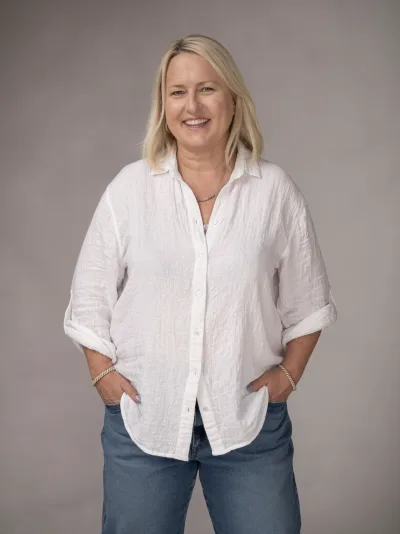
Angela Schellenberg
Yes. Estrangement from your mother is grief — not a chapter you closed, not a decision that cancels the pain. It is an ongoing, unwitnessed loss with no funeral, no casseroles, and no cultural script. Your nervous system does not distinguish between a mother who died and a mother who is simply gone. The absence registers the same way.
A note on credit: Mother Hunger® is a term and framework created by therapist Kelly McDaniel, author of Mother Hunger® (2021). This article explains her concept in my own words. Learn more at kellymcdaniel.com.
What makes estrangement a loss and not just a decision?
When a mother dies, the world around you organizes itself around that fact. People bring food. They ask how you are. They remember the anniversary. There is a ritual, a container, a beginning and an end.
When you are estranged from your mother — whether she left, whether you left, whether the relationship simply became something you could no longer survive — none of that happens. The loss is just as real. The nervous system response is just as significant. But there is no name for what you are, no acknowledged day of mourning, and often no one in your life who understands why you still feel it years later.
That absence of witnessing is its own injury. You are left holding a grief that looks, from the outside, like a lifestyle choice. And so many daughters learn to hold it quietly, explaining themselves in shorthand — we're not close, it's complicated, she wasn't really in my life — because the full truth takes longer than most people are willing to stay.
Why does the nervous system respond to estrangement the way it responds to death?
Your body does not grieve abstractions. It grieves attachment. And your mother was your first attachment — the person your nervous system organized itself around before you had language, before you had memory, before you had any capacity to assess whether the relationship was healthy or safe. That original wiring does not get updated just because a relationship ends or because you understand, intellectually, why the distance was necessary.
Research on early maternal separation supports this. A 2016 summary published in Psychological Science Observer on attachment research reported that early maternal separation can trigger traumatic emotional reactions and create long-term physiological vulnerability. That is not metaphor. That is the body carrying what the mind may have already processed and released.
This is why daughters who are estranged often describe a specific kind of exhaustion — not sadness exactly, not anger exactly, but a low-grade vigilance that lives in the chest, a bracing quality in relationships, a readiness for disappearance that never fully stands down. The nervous system learned something early, and it has not forgotten.
What does estrangement actually do to identity?
Grief from mother loss or estrangement does not stay in the feelings. It moves into identity. Into the question of who you are when the person who was supposed to reflect you back either couldn't or wouldn't.
Research by Dunn et al. (2022), which examined attachment states of mind in individuals who experienced early maternal disruption, found that identity and belonging emerged as a central theme. Participants weren't only grieving a person. They were navigating the deeper question of who am I without that original mirror, and where do I belong?
For daughters without mothers — whether through death, estrangement, emotional unavailability, or what Kelly McDaniel calls Mother Hunger® in her 2021 book of the same name — that identity disruption is often the wound underneath the wound. It is not just that the relationship is gone. It is that something about the self feels unwitnessed, unconfirmed, uncertain in a way that is very hard to put language to.
This can look like difficulty trusting your own perceptions. Like second-guessing your worth in relationships. Like a persistent sense that you are slightly outside your own life, watching it rather than inhabiting it fully.
What are the grief milestones no one warns you about in estrangement?
Grief from death has a calendar. People expect you to feel things at the one-month mark, the first holidays, the first anniversary. Estrangement grief has a calendar too, but no one names it, and so daughters often encounter it alone and without context.
Some of the moments that land hardest:
- Your wedding day, or the moment you realize she will not be there — or that having her there would not be safe
- Pregnancy and the postpartum period, when the absence of a mother to mother you into motherhood becomes physical
- Your child's birth, when you realize your child will not have a grandmother — or when you grieve the grandmother you yourself never had
- Mother's Day, which arrives every year with a cultural script written for a relationship you do not have
- Her birthday, your birthday, any birthday that once marked something between you
- The moment you realize she is aging — that if she died, you might not know right away, and that there may never be a reconciliation because time is running out
- When she does die — and you are left grieving not only her, but every version of her you hoped for and never got
These moments are not signs that something has gone wrong in your process. They are the calendar of an unwitnessed grief doing exactly what grief does: surfacing at the thresholds, at the places where a mother is supposed to be present.
What does attachment trauma actually mean for daughters without mothers?
The phrase attachment trauma gets used loosely, so it is worth being precise. Attachment trauma is not simply having a painful childhood or a difficult parent. It refers specifically to the experience of a primary attachment figure being the source of fear, abandonment, or profound unreliability — the person who was supposed to be the safe harbor being, instead, the storm.
This creates a particular kind of confusion in the nervous system. When threat and comfort come from the same source, the system cannot do what it is designed to do: move toward safety. The result, as Cassidy et al. described in their 2018 work on unresolved trauma and disorganized attachment, is an attachment pattern that can feel chaotic, emotionally split, or nearly impossible to articulate. You may love someone and be terrified of them simultaneously. You may grieve someone you chose to leave. You may miss someone who hurt you, and feel ashamed of missing them.
That confusion is not weakness. It is the logical outcome of an illogical situation — of needing someone who was not safe to need.
What daughters without mothers often carry, specifically, includes:
- A grief that has no socially recognized shape
- An identity that was never fully reflected back by the person who was supposed to do that first
- A nervous system that learned to expect abandonment or emotional unavailability as the baseline of love
- A persistent, low-level wondering about whether they are fundamentally too much, too little, or somehow the reason it went wrong
That last one — the internal story about being the cause — is what clinician Peg Streep, whose work synthesizes attachment theory and clinical observation, identified as internalized maternal distance: daughters who carry the message, not as a thought but as a felt sense, that they are not fully lovable or safe. It is not a belief you chose. It is a conclusion the child self drew from the evidence available.
Can anything actually help when the attachment wound is this early?
Yes. And the research is specific about why.
Scharf's 2018 review of attachment research found that what matters most for children navigating difficult attachment environments is not the presence of a perfect primary bond, but the number of secure relationships available. A daughter who did not have a consistently safe mother can still reorganize her attachment system — through therapy, through friendship, through partners, through communities where being known feels possible.
This matters because it reframes the work. It is not about replacing the mother, or healing the original wound into non-existence. It is about accumulating enough evidence, in the body, that safety is real and available — that not every close relationship ends in abandonment, that not every need will be met with distance or punishment.
That reorganization is slow. It happens in the nervous system, not just in the mind. And it often requires support from someone who understands both the grief dimension and the attachment dimension — because estrangement sits at the intersection of both, and you need a container that is large enough to hold that complexity without rushing toward resolution.
References: Cassidy et al., Unresolved Trauma and Reorganization in Mothers (2018); Psychological Science Observer, How Mother-Child Separation Causes Neurobiological Vulnerability into Adulthood (2016); Dunn et al., Attachment state of mind and trauma in mother and baby home adoptees (2022); Scharf, Does Attachment Research Focus Too Much on Moms? (2018); Kelly McDaniel, Mother Hunger® (2021).
Frequently asked questions
Is it normal to grieve someone I chose to be estranged from?
Yes, and the grief is often more complicated, not less, because the loss was a decision you made and may continue to make. You are grieving the relationship that existed, the relationship you needed and didn't get, and the possibility that it might one day be different — all at the same time. Grief does not require death. It requires attachment.
Why does estrangement grief come back at certain times of year?
Grief surfaces at thresholds — moments where a mother is culturally or developmentally expected to be present. Weddings, pregnancies, births, Mother's Day, her birthday, your birthday, diagnosis, aging — these are all moments when the absence becomes active again rather than dull. It is not regression. It is the grief doing exactly what grief does.
What is the difference between grief and attachment trauma?
Grief is the natural response to loss. Attachment trauma is more specific: it describes what happens when the person who was supposed to be your primary source of safety was also a source of fear, abandonment, or profound unpredictability. Many daughters without mothers are carrying both — the grief of the loss and the older wound of the attachment injury underneath it.
Can I heal from maternal estrangement even if nothing between us ever resolves?
Yes. Resolution between you and your mother is not a prerequisite for your nervous system to find more stability and safety. Research on attachment suggests that the number of secure relationships available to a person matters more than whether any single bond was repaired. Healing in this context is less about fixing the original relationship and more about building enough evidence, over time, that closeness does not have to mean danger.
What is Mother Hunger and how is it related to estrangement grief?
Mother Hunger® is a term coined by therapist and author Kelly McDaniel in her 2021 book of the same name. It describes the longing — often unnamed and carried across a lifetime — that develops in daughters who did not receive consistent nurturing, protection, or guidance from their mothers. Estrangement can be both a cause and a consequence of Mother Hunger®, and the grief that accompanies it is often rooted in longing for something that was never fully present, not only mourning something that was lost.
Keep reading
I lost my mom and I live in LA. Why can't I find grief support that actually feels like it's for me?
Why does fall feel so heavy before the holidays have even started?
Why do I feel like I never got to grieve? I was too busy handling everything.
Something to write in
Identity After Mother Loss
A guided journal for the question underneath the grief, which is who you are now that she is gone.
Read more · $14.99
Angela Schellenberg
Angela is a licensed trauma and grief therapist, attachment-focused EMDR specialist, and trained Mother Hunger® Facilitator (a framework created by Kelly McDaniel). She hosts the Grief, Trauma & Your Mama podcast and leads Equine Resourcing Intensives and equine-assisted retreats at Shakti Ranch in Malibu. Licensed in California, Washington, and Arizona. Work with Angela →